
Electricity bills continue to rise, pushing many homeowners to look for long-term solutions like solar energy. While solar panels are becoming more popular, people still have concerns before making the investment. One of the biggest worries is durability, whether the panels will last for years or require frequent repairs. The fear of high replacement costs also makes many homeowners hesitant to switch.
Before investing in solar, one of the biggest questions homeowners ask is how long do solar panels last and whether they are truly worth the cost. Understanding the lifespan and performance of solar panels helps you make a confident decision and ensures you get the best return on your investment over time.
What is the Average Lifespan of Solar Panels?
Many people assume that solar panels stop working after a few years, which creates doubt before investing. This misunderstanding often leads homeowners to think solar is not a reliable long-term solution.
In reality, solar panels are built for durability and long-term performance. Most high-quality solar panels have an average lifespan of 25 to 30 years. They do not suddenly stop working after this period, instead, their efficiency gradually reduces over time.
Even after decades of use, solar panels can still produce around 70 to 80 percent of their original output. This slow degradation means you continue to generate electricity and save on energy bills for many years.
This makes solar a long-term investment rather than a short-term expense.
Why Do Solar Panels Last So Long?
Solar panels are constantly exposed to sunlight, rain, wind, and temperature changes, yet they continue to perform efficiently for decades. This long lifespan is not by chance, it comes from strong engineering and durable materials used in their design.
Their ability to handle tough outdoor conditions makes them a reliable long-term energy solution for homeowners.
Here’s what makes solar panels so durable:
- Tempered glass protection: Solar panels are covered with high-strength tempered glass that protects them from external damage. This glass is designed to withstand heavy rain, strong winds, and even minor impacts without cracking easily.
- Weather-resistant structure: The entire panel is built to resist harsh weather conditions such as heat, cold, humidity, and dust. This ensures consistent performance even in changing environmental conditions.
- No moving parts: Unlike many other machines, solar panels do not have moving components. This reduces wear and tear, which is one of the main reasons they require very little maintenance over time.
- Strong frame and sealing: Panels are sealed tightly with durable materials that prevent moisture or dirt from entering inside. The strong frame keeps all components protected and stable for long-term use.
This strong design is the main reason they can perform efficiently for decades.
What Affects the Lifespan of Solar Panels?
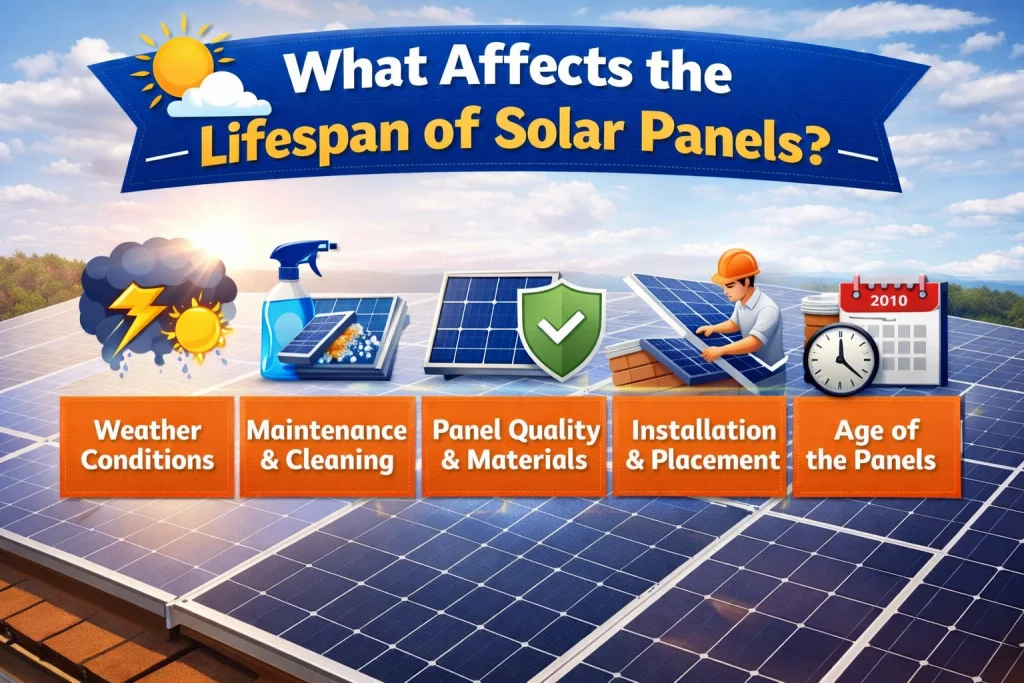
Not all solar panels perform the same over time, even if they look similar at first. Their lifespan depends on several external and practical factors that directly impact efficiency and durability.
Understanding these factors helps you make a better investment decision and ensures you get long-term performance from your system.
Here are the key factors that affect solar panel lifespan:
- Weather conditions: Solar panels are designed to handle outdoor environments, but extreme weather like heavy storms, high heat, or constant dust can affect their performance over time. Areas with stable weather conditions usually see better long-term efficiency.
- Installation quality: Even the best solar panels won’t perform well without proper solar panel installation. Correct angle, direction, and secure mounting play a major role in efficiency and lifespan.
- Regular maintenance: Dust, dirt, and debris can block sunlight and reduce energy generation. Simple maintenance like cleaning panels and checking connections helps maintain performance and prevents long-term damage.
- Panel quality and brand: Higher-quality panels are built with better materials and advanced technology, which allows them to last longer and perform more efficiently. Cheaper panels may degrade faster and require earlier replacement.
- Panel age and degradation: Over time, all solar panels naturally lose efficiency due to wear and tear. This process, known as degradation, means panels produce slightly less energy each year. High-quality panels degrade slower, helping maintain better performance over a longer lifespan.
Choosing the right system and proper care can significantly extend lifespan.
Do Solar Panels Stop Working After 25 Years?
A common concern among homeowners is that solar panels completely stop working after 25 years. This idea often creates doubt and makes people question whether solar is truly a long-term investment.
In reality, solar panels do not suddenly fail after a specific time period. Instead, their performance gradually reduces over the years due to natural wear and exposure to sunlight. On average, panels lose about 0.5% to 1% efficiency per year, which is a very slow and manageable decline.
Even after 25 to 30 years, most solar panels continue to generate electricity and can still operate effectively. Many systems are known to perform well beyond 30 years, especially when properly maintained and installed.
They continue to work, just at slightly reduced efficiency.
Signs Your Solar Panels Need Replacement
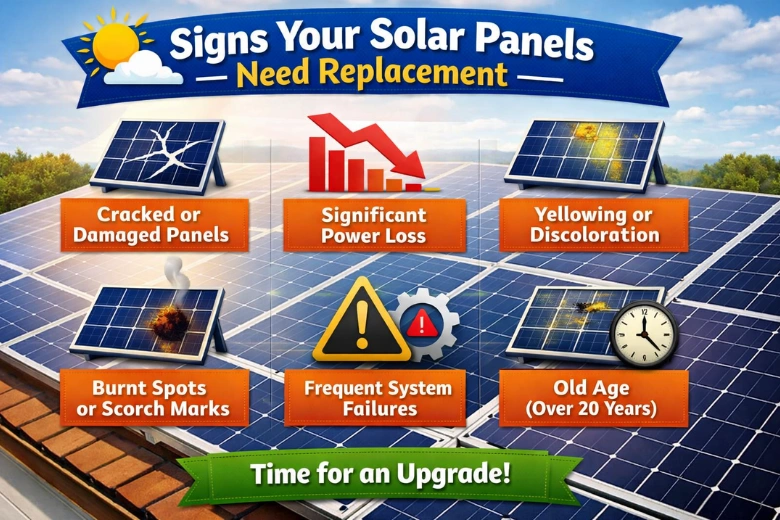
Solar panels are designed to last for many years, but over time, their performance can decline due to regular wear and environmental exposure. Knowing the early warning signs can help you take action before your system starts affecting your energy savings.
Instead of waiting for complete failure, it’s better to identify these detailed signs:
- Noticeable drop in performance: If you see a consistent decrease in your system’s power output or higher electricity bills despite using the same appliances, it may indicate that your panels are no longer performing efficiently. Gradual decline is normal, but a sudden drop should not be ignored.
- Visible physical damage: Check your panels for cracks, scratches, discoloration, or burnt marks. These issues can reduce sunlight absorption and may also lead to internal damage, affecting overall performance.
- Frequent system issues or faults: If your system requires regular repairs or shows repeated faults in the inverter or connections, it may be a sign that the panels are aging and not functioning properly.
- Outdated technology and lower efficiency: Older panels may still generate electricity, but newer panels are much more efficient. Upgrading can help you produce more power in the same space, improving overall savings.
- Reduced battery charging efficiency: If your system is not storing enough energy during the day, it could be due to declining panel performance, which directly affects your backup capacity.
Timely upgrades ensure your system stays efficient and cost-effective.
How to Increase the Lifespan of Solar Panels
Proper care can make a big difference in how long your solar panels last and how efficiently they perform. Even small steps, when done consistently, can help you maintain strong performance and avoid costly issues in the long run.
- Over time, dust, dirt, bird droppings, and debris can build up on the surface of solar panels. This blocks sunlight and reduces energy generation. Cleaning the panels periodically ensures maximum sunlight absorption and keeps performance consistent throughout the year.
- Installing panels at the correct angle and direction helps them receive optimal sunlight while reducing stress from wind, rain, and other environmental factors. A well-installed system not only performs better but also lasts longer without frequent issues.
- Keeping track of your system’s energy output allows you to notice any sudden drop in performance. Early detection of issues like wiring faults or reduced efficiency helps prevent bigger problems and costly repairs later.
- Shade from trees, buildings, or other obstacles can reduce energy production and create uneven performance. Ensuring panels are placed in a clear, sunlight-rich area helps maintain consistent output.
- While basic maintenance can be done yourself, occasional professional checks ensure everything is working properly. Experts can identify hidden issues and improve system efficiency.
Maintenance is simple but plays a big role in long-term savings.
Are Solar Panels Worth It Long Term?
Solar panels are not just a short-term solution, they are a long-term investment that continues to deliver value for years. From reducing electricity bills to providing energy independence, they help homeowners take control of rising energy costs. With proper solar panel installation and basic maintenance, solar panels can perform efficiently for decades, making them a reliable and practical choice.
If you are planning to make your home more energy-efficient, combining solar with smart solutions can further increase your savings. Contact us for expert guidance and discover the right setup for your needs, helping you maximise performance and long-term benefits.
Conclusion
Hot water heat pumps and electric water heaters both serve the same purpose, but they differ significantly in efficiency, cost, and performance. While electric heaters are easier to install, heat pumps provide better long term savings and energy efficiency.
If you are planning to upgrade your water heating system, choosing the right option is essential for both comfort and cost savings. Contact us today for expert advice and professional support to select the best hot water solution for your home.