
Running a business is already expensive, and rising electricity bills can make it even harder to manage monthly costs. Many business owners are looking for ways to reduce power expenses, improve energy efficiency, and gain better control over their long term operating costs without affecting daily work.
This is where a commercial solar system can make a real difference. By using sunlight to generate electricity for your business, solar can help reduce dependence on grid power and support long term savings. In this guide, you will learn what a commercial solar system is, how it works, its benefits, cost factors, installation process, maintenance needs, and when to contact professionals for the right solar solution.
What is a Commercial Solar System?
A commercial solar system is a solar power setup designed to generate electricity for business properties. It uses solar panels to capture sunlight and convert it into usable power for offices, factories, warehouses, retail stores, schools, restaurants, and other commercial spaces.
Compared to residential solar systems, commercial solar systems are usually larger because businesses often use more electricity during working hours. When designed properly, they can help reduce dependence on grid electricity, lower energy bills, and support long term savings for the business.
How Does a Commercial Solar System Work?
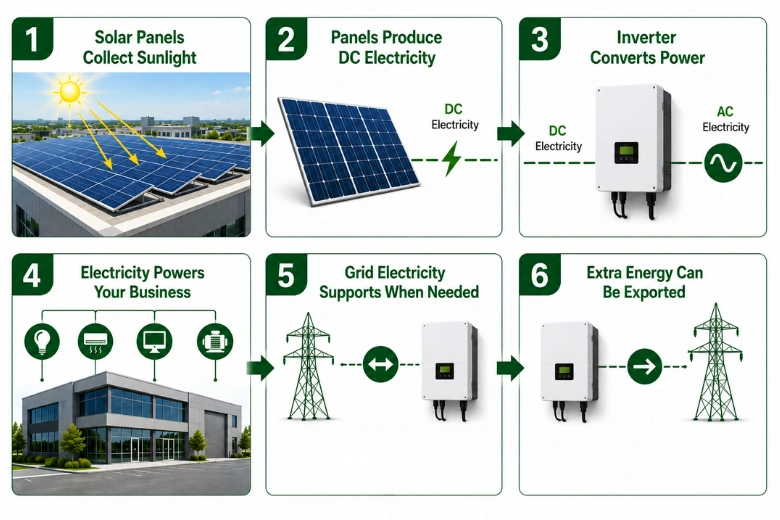
A commercial solar system works by turning sunlight into electricity that your business can use throughout the day. The system is designed to generate power from solar panels and supply it to your building’s electrical setup.
This process may sound technical, but it is easy to understand when broken down into simple steps.
Step 1: Solar Panels Collect Sunlight
Solar panels are installed on the roof, ground, or another suitable area where they can receive direct sunlight. When sunlight hits the panels, the solar cells inside them begin producing electricity.
The better the sunlight exposure, the more electricity the system can generate. This is why panel placement, roof direction, shading, and system design are important for good performance.
Step 2: Panels Produce DC Electricity
The electricity generated by solar panels is called direct current electricity. This is the first form of power created by the system.
However, most commercial buildings and equipment cannot use direct current electricity directly. It needs to be converted into a usable form before it can power lights, computers, machinery, air conditioning, and other business equipment.
Step 3: Inverter Converts Power
The inverter is one of the most important parts of a commercial solar system. It converts direct current electricity from the solar panels into alternating current electricity.
Alternating current electricity is the standard type of power used in most business properties. Once converted, the electricity becomes ready to use for daily operations.
Step 4: Electricity Powers Your Business
After conversion, the solar electricity is supplied to your building’s electrical system. It can then power different areas of your business, including lighting, computers, machinery, refrigeration, air conditioning, security systems, and other equipment.
This helps reduce the amount of electricity your business needs to buy from the grid during the day.
Step 5: Grid Electricity Supports When Needed
Solar panels only generate electricity when there is enough sunlight. On cloudy days, early mornings, evenings, or during high energy demand, your business may need extra electricity.
In this case, your system can draw power from the grid to make sure your operations continue without interruption.
Step 6: Extra Energy Can Be Exported
If your commercial solar system produces more electricity than your business is using at that time, the extra energy may be sent back to the grid depending on your setup and electricity provider.
This helps reduce energy waste and may support better overall savings depending on your energy arrangement.
This simple process helps reduce grid electricity usage, lower energy costs, and give your business better control over long term energy expenses.
Key Components of a Commercial Solar System
A commercial solar system is made up of several important parts that work together to generate, convert, and manage electricity for your business. Each component plays a role in system performance, safety, and long term reliability.
Understanding these components helps business owners know what they are investing in before installation.
- Solar Panels: Solar panels collect sunlight and convert it into electricity. The number of panels required depends on your roof space, electricity usage, and overall system size.
- Inverter: The inverter converts electricity produced by the solar panels into usable power for your business. It is one of the most important parts of the system because most commercial equipment needs this converted power to operate.
- Mounting Structure: The mounting structure holds the solar panels securely in place. It must be strong enough to handle weather conditions and suitable for your roof type or ground installation area.
- Electrical Wiring: Electrical wiring connects the solar panels, inverter, and building’s electrical system. Proper wiring is important for safe operation, smooth power flow, and long term performance.
- Monitoring System: A monitoring system helps track how much electricity your solar system is producing. It allows business owners to check performance and identify issues early if energy production drops.
- Battery Storage: Battery storage is optional and is used to store extra solar energy for later use. It is useful for businesses that need backup power or want more control over energy usage.
Every component in a commercial solar system has an important purpose. When all parts are correctly selected and installed, the system can perform more efficiently, safely, and reliably for many years.
Benefits of Commercial Solar System
For many businesses, solar becomes a valuable investment because it provides both financial and operational benefits over time.
- Lower Bills: Solar power reduces the amount of electricity your business needs to buy from the grid, which can help lower monthly power bills.
- Operating Savings: Lower electricity costs can improve overall business profitability and allow you to use the saved budget in other important areas.
- Energy Control: Generating your own electricity gives your business more control over energy usage and reduces dependence on changing power prices.
- Long Term Value: A well installed commercial solar system can provide savings for many years, making it a strong long term investment.
- Sustainable Image: Using solar energy shows customers, staff, and partners that your business supports cleaner and more responsible energy use.
- Property Value: Commercial properties with solar systems may become more attractive because they offer better energy efficiency and lower operating costs.
These benefits make solar a smart choice for many commercial properties looking for long term value.
Types of Commercial Solar Systems
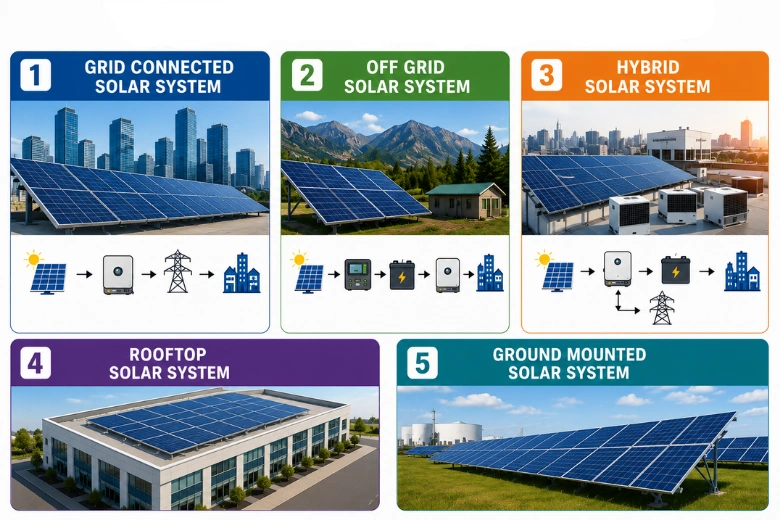
Choosing the right type of commercial solar system helps your business get better performance, improved savings, and long term value from the installation.
1. Grid Connected Solar System
A grid connected solar system is connected to the main electricity grid. During the day, your business uses the electricity generated by solar panels, and when solar production is low, it can draw power from the grid.
This is one of the most common options for commercial properties because it is practical, reliable, and usually more cost effective than systems that require full battery backup. It is suitable for offices, retail stores, schools, and businesses that operate mainly during daylight hours.
Best for: Businesses that want to reduce electricity bills while still having grid support.
2. Off Grid Solar System
An off grid solar system works independently from the main electricity grid. It usually requires battery storage because the business needs stored energy when sunlight is not available, such as at night or during cloudy weather.
This type of system is more suitable for remote business locations where grid connection is unavailable, unreliable, or too expensive to install. Since it depends heavily on battery storage, proper system sizing is very important.
Best for: Remote sites, farms, rural businesses, and locations without reliable grid access.
3. Hybrid Solar System
A hybrid solar system combines solar panels, grid connection, and battery storage. This setup allows your business to use solar power during the day, store extra energy in batteries, and still use grid electricity when required.
Hybrid systems offer more flexibility and energy security compared to standard grid connected systems. They are useful for businesses that want backup power support or better control over energy usage during peak demand periods.
Best for: Businesses that want solar savings with backup power and better energy control.
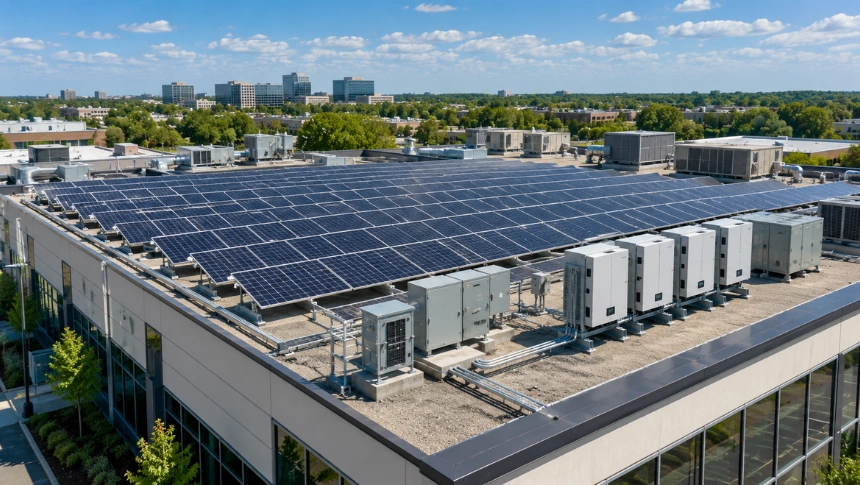
4. Rooftop Solar System
A rooftop solar system is installed on the roof of a commercial building. It is one of the most popular options because many businesses already have unused roof space that can be used for solar panels.
This system is suitable for offices, factories, warehouses, retail buildings, and schools with strong roof structures and good sunlight exposure. Rooftop systems help businesses use existing space without needing extra land.
Best for: Businesses with large, unused roof areas and good sunlight exposure.
5. Ground Mounted Solar System
A ground mounted solar system is installed on open land instead of a roof. It is useful for businesses that have available land or need a larger solar setup than their roof can support.
Ground mounted systems can sometimes be positioned at better angles for sunlight, which may improve energy production. However, they require enough open space and proper planning for installation.
Best for: Large commercial properties, industrial sites, farms, and businesses with available land.
Each type of commercial solar system is designed for different business needs. The best option depends on your electricity usage, roof or land availability, location, backup power needs, and long term energy goals.
Where Can Commercial Solar Systems Be Used?
The system can be designed based on the size of the property, roof space, electricity usage, and business operating hours.
- Offices: Offices use electricity for lighting, computers, printers, air conditioning, internet systems, and other daily equipment. A commercial solar system can help reduce regular power bills and support a more energy efficient workplace.
- Factories: Factories often have high electricity demand because of machinery, production equipment, lighting, and ventilation systems. Solar can help reduce operating costs and support more stable long term energy planning.
- Warehouses: Warehouses usually have large roof areas, making them suitable for rooftop solar systems. Solar power can support lighting, security systems, ventilation, and other warehouse operations.
- Retail Stores: Retail stores use electricity for lighting, cooling, display systems, payment counters, and daily operations. Solar can help reduce energy costs while creating a more sustainable business image.
- Schools: Schools can use solar power for classrooms, lighting, computers, administration areas, and other facilities. It can also support sustainability education by showing students how clean energy works in real life.
- Restaurants: Restaurants often use a lot of electricity for refrigeration, cooking equipment, lighting, air conditioning, and ventilation. A commercial solar system can help reduce energy costs in daily operations.
- Healthcare Facilities: Clinics, medical centres, and healthcare facilities need reliable electricity for lighting, cooling, equipment, and patient comfort. Solar can help reduce running costs while supporting efficient energy use.
- Hotels and Motels: Accommodation businesses use electricity for rooms, hot water systems, lighting, laundry, kitchens, and climate control. Solar can help reduce ongoing operating expenses.
- Commercial Buildings: Multi tenant buildings, showrooms, and business centres can benefit from solar by reducing shared energy costs and improving building efficiency.
If your business uses electricity regularly, solar can help reduce long term energy expenses, improve energy control, and support a more sustainable future.
Commercial Solar System Installation Process
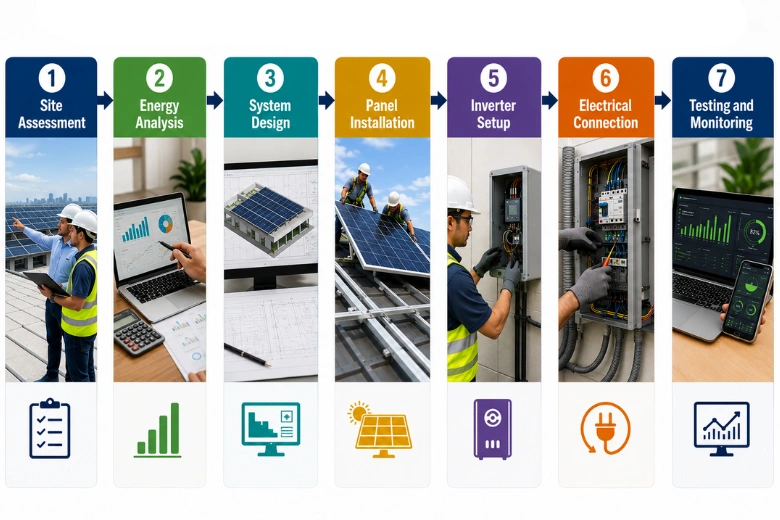
For businesses looking for reliable long term performance, professional commercial solar system installation in auckland can help ensure the system is designed correctly, installed safely, and positioned for maximum solar output.
- Site Assessment: Professionals inspect your roof condition, sunlight exposure, available space, and electrical setup before recommending a system.
- Energy Analysis: Your business electricity usage is reviewed to understand how much solar power your property may need.
- System Design: A solar system is designed based on your energy needs, roof layout, budget, and future business requirements.
- Panel Installation: Solar panels are installed securely on the roof or ground mounted structure to capture sunlight effectively.
- Inverter Setup: The inverter is connected to convert solar electricity into usable power for your business.
- Electrical Connection: The system is safely connected to your building’s electrical setup by qualified professionals.
- Testing and Monitoring: The complete system is tested to make sure it is working properly before regular use begins.
Proper installation is important for safety, performance, and long term savings. A correctly installed commercial solar system can deliver better results and reliable energy production for many years.
How Much Can Businesses Save with Solar?
The payback period is also an important part of understanding savings. In simple words, it means how long it takes for the savings from lower electricity bills to cover the cost of the solar system.
- Daily Usage: Businesses with higher daytime electricity usage can benefit more because they use solar power directly during working hours.
- System Size: A larger solar system can produce more electricity, but it should be matched properly to the business’s actual energy needs.
- Sunlight Exposure: More sunlight means better energy production. Roof direction, shading, and panel placement can affect how much power the system generates.
- Electricity Rates: Higher electricity prices can increase the value of solar savings because the business reduces the amount of power bought from the grid.
- Operating Hours: Businesses open during the day usually get more value from solar because they can use the energy as it is produced.
- System Performance: A well designed and properly maintained system produces more reliable energy, which improves long term savings.
Why Daytime Usage Matters
Solar panels generate electricity during daylight hours. If your business uses most of its electricity during the day, you can use more of the solar power directly instead of relying on the grid.
This direct usage often gives better financial value because it reduces the amount of electricity purchased from your energy provider.
Understanding Payback Period
The payback period is the time it takes for your solar savings to recover the cost of installation. For example, if your system saves money every month, those savings gradually help cover the upfront investment.
After the payback period, the electricity savings can continue for many years, making solar a long term investment for the business.
Commercial solar can help businesses reduce electricity bills and improve long term savings. The more solar energy your business uses directly during working hours, the better the financial benefit can be over time.
Conclusion
A commercial solar system can be a smart investment for businesses that want to reduce electricity bills, improve energy control, and support long term sustainability. It helps lower operating costs while providing a cleaner and more reliable energy solution for daily business use.
Choosing the right system depends on your energy usage, roof space, budget, and future business needs. If you are unsure where to start, contact us for expert guidance. A professional assessment can help you choose the right commercial solar solution and ensure your system is installed for long term performance and savings.