
Many business owners are interested in solar energy, but one question often comes up before making the investment: will it actually save enough money to be worth it?
With electricity costs continuing to rise, businesses want confidence that the money spent on a solar system today will deliver real financial benefits in the years ahead. Understanding the return on investment is often the key factor that determines whether a business moves forward with solar.
The good news is that commercial solar can provide significant long term savings when designed correctly for your energy needs. By reducing dependence on grid electricity and lowering monthly power costs, many businesses can recover their investment while continuing to benefit from ongoing savings for years. In this guide, you will learn what commercial solar ROI means, how it is calculated, what affects your return, and how to maximise the value of your solar investment.
What is Commercial Solar ROI?
Commercial Solar ROI, or Return on Investment, is a way of measuring how much financial value your business receives from installing a commercial solar system. It compares the money you invest in the system with the savings it generates over time through reduced electricity bills. In simple terms, ROI helps business owners understand whether the long term savings from solar are worth the upfront installation cost.
For businesses, commercial solar ROI is one of the most important factors when considering solar energy. A well designed system can continue producing electricity for many years, helping reduce operating costs and improve overall profitability. The higher the energy savings and the lower the ongoing expenses, the better the return on investment. Understanding ROI allows businesses to make informed decisions and see the long term financial benefits of switching to solar power.
Why Commercial Solar ROI Matters
A strong commercial solar ROI gives business owners confidence that their investment is working for them. Instead of viewing solar as an expense, it becomes easier t
- Financial Value: ROI helps businesses understand how much value a commercial solar system can generate compared to the initial investment.
- Better Decisions: Knowing the expected return makes it easier to compare solar with other business investments and choose the most beneficial option.
- Long Term Savings: Commercial solar systems can produce electricity for many years, helping businesses reduce energy costs well beyond the payback period.
- Lower Risk: Understanding ROI helps reduce uncertainty by showing the potential financial benefits and expected returns over time.
- Budget Planning: Expected savings and payback estimates help businesses plan future energy expenses and financial budgets more effectively.
Understanding commercial solar ROI helps businesses evaluate the true value of solar energy and make more informed investment decisions for the future.
How Commercial Solar ROI is Calculated
The goal is to compare the total investment cost with the financial benefits generated through reduced electricity expenses during the system’s lifespan.
1. Installation Cost
The first part of the calculation is the total cost of purchasing and installing the commercial solar system. This includes solar panels, inverter, mounting structure, electrical work, and installation expenses.
A higher installation cost may increase the payback period, but it can also provide greater long term energy production if the system is sized correctly.
2. Annual Energy Savings
Annual energy savings refer to the amount of money your business saves on electricity bills each year after installing solar.
The more electricity your business uses during daylight hours, the greater the potential savings from solar energy generation.
3. Maintenance Costs
Although commercial solar systems generally require minimal maintenance, ongoing servicing and inspections should still be considered when calculating ROI.
Lower maintenance costs usually contribute to a stronger return on investment over the system’s lifetime.
4. System Lifespan
Most commercial solar systems are designed to operate efficiently for many years. The longer the system continues generating electricity, the greater the total financial return.
This is why businesses often look at long term savings rather than focusing only on the initial installation cost.
5. Future Electricity Prices
Electricity prices tend to increase over time. As power costs rise, the value of the electricity produced by your solar system also increases.
This means solar savings can become even more significant in the future, improving overall ROI.
Simple Commercial Solar ROI Formula
A simple way to understand ROI is:
Commercial Solar ROI = Total Financial Savings ÷ Total Solar Investment Cost
The higher the savings compared to the installation cost, the stronger the return on investment.
Factors such as installation cost, electricity savings, maintenance expenses, system lifespan, and future energy prices all play an important role in determining the overall return.
How Long Does Commercial Solar Take to Pay for Itself?
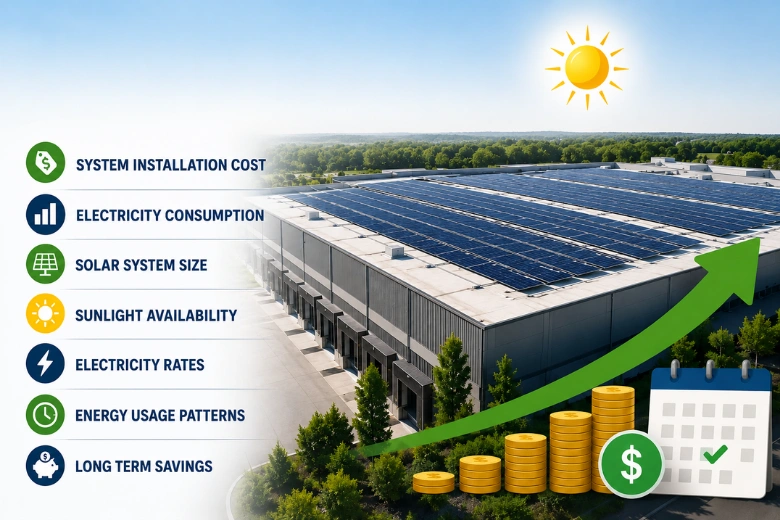
While every situation is different, the following factors have the biggest impact on how quickly a business can recover its solar investment.
- System Installation Cost: Lower installation costs can help reduce the payback period and allow businesses to recover their investment sooner.
- Electricity Consumption: Businesses with higher daytime electricity usage often see faster returns because they use more of the solar power generated.
- Solar System Size: A properly sized system can maximise savings and improve the overall return on investment.
- Sunlight Availability: Properties with strong sunlight exposure generally produce more electricity, which can shorten the payback period.
- Electricity Rates: Higher grid electricity prices can increase the value of solar savings and help the system pay for itself faster.
- Energy Usage Patterns: Businesses that operate mainly during daylight hours can often benefit more from solar energy production.
- Long Term Savings Even after the payback period is reached, the system can continue generating electricity and reducing power bills for many years.
The time it takes for commercial solar to pay for itself depends on several factors, but a well designed system can provide ongoing savings long after the initial investment has been recovered.
Factors That Affect Commercial Solar ROI
Several factors can influence how quickly your business recovers its solar investment and how much long term value the system delivers. Understanding these factors can help you maximise your commercial solar ROI.
- System Size Selection: Choosing the right system size is important. A system that is too small may not generate enough savings, while an oversized system may increase upfront costs unnecessarily.
- Business Energy Usage: Businesses that use more electricity during daylight hours often achieve better ROI because they can directly use the solar power being generated.
- Electricity Price Changes: Higher electricity rates generally improve solar ROI because every unit of solar energy produced replaces more expensive grid electricity.
- Sunlight Exposure Levels: The amount of sunlight your solar panels receive affects energy production. Better sunlight exposure usually leads to greater savings and improved ROI.
- Roof Design Quality: Roof direction, angle, available space, and shading can all impact solar performance and overall financial returns.
- Solar Equipment Quality: High quality solar panels and inverters often provide better efficiency, reliability, and energy production over the system’s lifespan.
- Installation Quality Standards: A professionally installed system is more likely to operate efficiently and generate consistent savings over many years.
- Ongoing System Maintenance: Regular inspections and maintenance help ensure the system continues performing at its best and maximises long term returns.
Understanding these factors helps businesses make smarter decisions and achieve better long term savings.
When Should Businesses Contact Professionals?
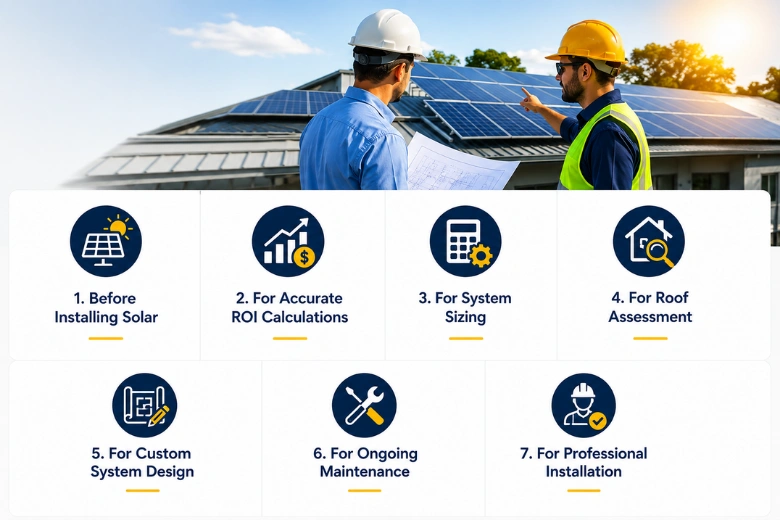
Working with experienced solar specialists can help businesses avoid costly mistakes and choose a system that is properly designed for their specific requirements.
- Before Installing Solar: If you are considering commercial solar system installation in auckland, a professional assessment can help determine the right system size, expected savings, and overall suitability for your property.
- For Accurate ROI Calculations: Professionals can analyse your electricity usage and provide realistic estimates of potential savings, payback period, and return on investment.
- For System Sizing: Choosing the correct system size is essential for maximising solar performance and long term financial returns.
- For Roof Assessment: Experts can evaluate roof condition, available space, shading, and sunlight exposure before installation begins.
- For Custom System Design: Every business has different energy needs. A customised solar solution helps improve efficiency and maximise energy production.
- For Ongoing Maintenance: Regular inspections and servicing help ensure the system continues operating efficiently and delivering expected savings.
- For Professional Installation: Experienced commercial solar system installers in auckland can ensure the system is installed safely, correctly, and in compliance with industry standards.
The right guidance can improve system performance, maximise savings, and provide greater confidence in your commercial solar project.
Conclusion
Investing in a commercial solar system is about more than just reducing electricity bills. It is a long term strategy that can help businesses improve energy efficiency, gain greater control over operating costs, and create ongoing financial value. Understanding commercial solar ROI allows you to make informed decisions and evaluate the true benefits of solar before making an investment.
Every business has different energy requirements, which is why choosing the right system is essential for achieving the best results. If you want to understand your potential savings, payback period, and the most suitable solar solution for your property, contact Clean Energy Solutions today. Our team can provide expert advice and help you find a commercial solar system designed to deliver long term performance and value for your business.