
Is your heat pump taking longer to heat your home, making unusual noises, or using more electricity than it used to?
As heat pumps get older, their performance can gradually decline, leaving homeowners unsure whether a repair will solve the problem or whether it’s time to consider a replacement. Since replacing a heat pump is a significant investment, knowing the warning signs can help you make the right decision.
In this guide, we’ll look at 7 signs your heat pump needs replacing, from poor heating performance and rising energy bills to frequent repairs and an ageing system. If your existing system is no longer meeting your home’s heating and cooling needs, professional heat pump installation can provide a more efficient long-term solution.
How Long Does a Heat Pump Usually Last?
Most heat pumps are built to provide reliable heating and cooling for many years, but their lifespan can vary depending on how they are installed, used, and maintained. Age is an important factor, but it doesn’t automatically mean that an older heat pump needs to be replaced.
A well-maintained older system may continue working efficiently, while another system of the same age may experience frequent faults and rising running costs. Looking at the system’s overall condition, performance, and repair history gives you a better idea of whether replacement is necessary.
- Average Lifespan: A quality heat pump can often operate for many years when properly installed and maintained.
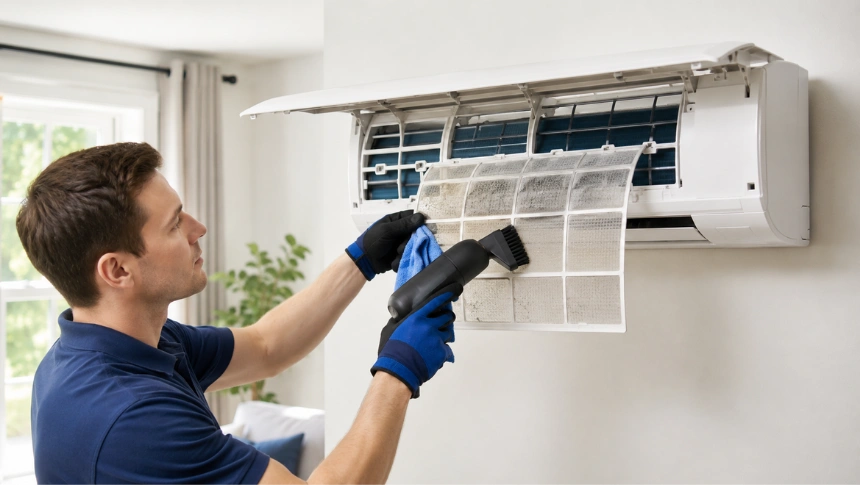
- Maintenance History: Regular cleaning and professional servicing can help maintain performance and extend the system’s useful life.
- System Condition: Consider how well the heat pump currently heats and cools your home, rather than looking at its age alone.
- Repair History: Frequent or expensive repairs may indicate that continuing to maintain an older system is becoming less worthwhile.
An older heat pump that works reliably may not need replacing, while a younger system with repeated problems could require closer assessment.
7 Signs Your Heat Pump Needs Replacing
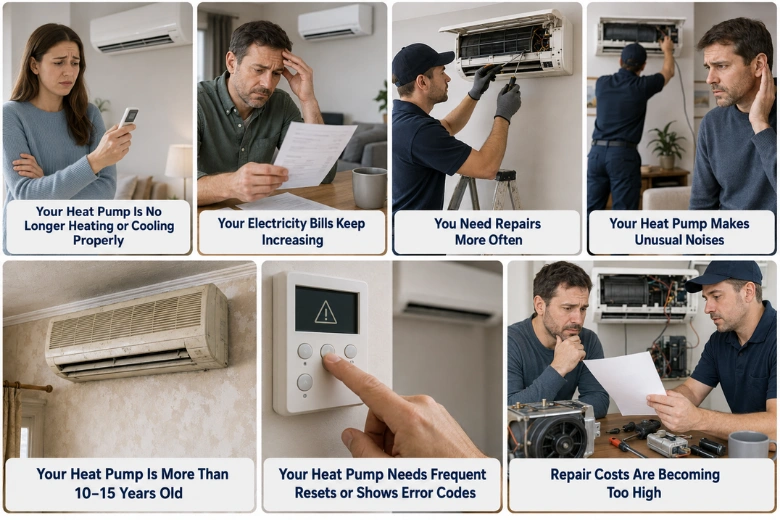
Not every heat pump problem means you need a new system. However, when several warning signs appear together, it may be time to look at whether continued repairs are still worthwhile. Knowing what to look for can help you make a decision before the system fails completely.
1. Your Heat Pump Is No Longer Heating or Cooling Properly
A heat pump should keep your home comfortable without taking too long to reach the temperature you set. If its performance has gradually declined, it may be a sign that the system is ageing or that an important component is no longer working efficiently.
What You May Notice:
- Takes Longer to Reach the Desired Temperature: The system runs for longer but struggles to reach the setting.
- Struggles in Extreme Weather: It may have difficulty keeping your home warm during very cold weather or cool during hot conditions.
- Inconsistent Indoor Temperature: Some areas may feel too warm or too cold even when the system is running.
- Performance Keeps Declining: If servicing doesn’t improve the problem, ageing or failing components could be responsible.
If these issues continue despite professional servicing, replacing the heat pump may provide better reliability, comfort, and energy efficiency.
2. Your Electricity Bills Keep Increasing
If your electricity bills are rising even though your household’s hot water and heating habits haven’t changed much, your heat pump may be using more energy than it should. This can happen as an older system loses efficiency or when components begin to wear out.
What You May Notice:
- The system consumes more electricity while providing the same level of heating or cooling.
- Your heat pump may need to run for longer to reach the desired temperature.
- Ageing components can make the system work harder than before.
- If high energy costs continue despite regular maintenance, replacing the system may offer better long-term value.
Before deciding on replacement, have the system professionally checked to determine whether the higher energy use can be resolved through servicing or repairs.
3. You Need Repairs More Often
Occasional repairs are normal, but if your heat pump keeps breaking down, the ongoing costs can quickly add up. Frequent faults may also suggest that several components are ageing and the system is becoming less reliable.
What You May Notice:
- The heat pump needs attention more often than it used to.
- Small repair bills can add up when problems keep returning.
- Multiple faults may indicate that different parts of the system are wearing out.
- If repairs are becoming expensive, compare the ongoing costs with replacing the system.
If your heat pump requires frequent repairs, a professional assessment can help you decide whether another repair is worthwhile or whether replacing the system would be a better long-term option.
4. Your Heat Pump Makes Unusual Noises
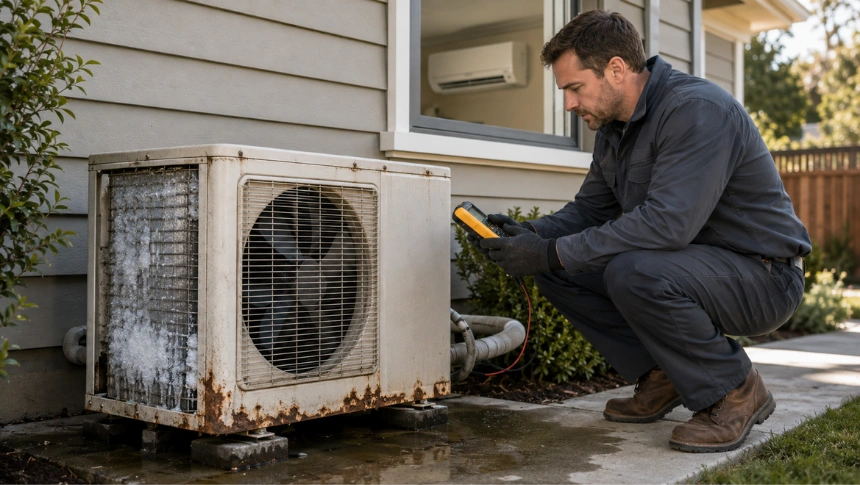
Heat pumps make some normal operating sounds, but a sudden change in noise can indicate that something is not working as it should. Grinding, rattling, buzzing, or loud vibrations may point to worn or damaged components.
- Grinding Sounds: May indicate a problem with the fan motor or other moving parts.
- Rattling or Vibrating: Could be caused by loose or worn components.
- Buzzing Sounds: May indicate an electrical or motor-related issue.
- Noise Getting Worse: Persistent or increasing noise can be a sign of an ageing system.
If major components are worn and the system is already old, replacing the heat pump may be more practical than continuing with repairs.
5. Your Heat Pump Is More Than 10–15 Years Old
Age doesn’t automatically mean your heat pump needs replacing, but an older system may not perform as efficiently as a newer model. If your heat pump is also showing other signs of ageing, replacement may be worth considering.
What You May Notice:
- Older systems may use more energy to provide the same level of heating or cooling.
- The system may take longer to reach your preferred temperature.
- Ageing components can lead to more frequent breakdowns.
- Increasing electricity bills can make an older system less economical to operate.
Consider its performance, energy use, maintenance history, and repair costs before making a decision.
6. Your Heat Pump Needs Frequent Resets or Shows Error Codes
If your heat pump regularly switches off, needs to be reset, or displays error codes, it may be warning you about an underlying problem. While some faults can be temporary and easily repaired, repeated issues should not be ignored.
What You May Notice:
- Repeated Error Codes: The same code keeps appearing after the system is restarted.
- Frequent Resets: You need to restart the heat pump regularly to keep it operating.
- Temporary Faults: An occasional error may be caused by a minor or temporary issue.
- Persistent Problems: If faults continue, a professional diagnosis can identify the cause and determine whether repair or replacement is the better option.
Avoid repeatedly resetting the system without finding the cause, as this can allow an underlying problem to continue unnoticed.
7. Repair Costs Are Becoming Too High
As a heat pump gets older, repairs can become more frequent and expensive. If a major component fails, it is worth looking at the total repair cost alongside the age and condition of your system before deciding what to do next.
What You May Notice:
- Major Component Failure: Parts such as the compressor, fan motor, or other key components can be costly to replace.
- Repeated Repairs: Several repairs over a short period may indicate that the system is reaching the end of its useful life.
- Increasing Repair Bills: Add up recent repair costs to see whether maintaining the existing system still makes financial sense.
- Older System: A costly repair on an older heat pump may not offer the best long-term value compared with a new, more efficient system.
However, if high repair costs, frequent breakdowns, rising energy bills, and declining performance are happening together, replacement may be a more practical long-term option. Professional assessment can help you compare the cost of another repair with the benefits of installing a new system.
Repair or Replace: Which Option Makes More Sense?
The key is to look at the age, condition, repair cost, and overall performance before making a decision.
Repair May Make Sense When
Repairing your heat pump can be the better option when the system is still in good overall condition and the problem is relatively small.
- Newer heat pump with a good maintenance history may still have plenty of useful life left.
- Issues such as a faulty sensor, blocked filter, or small component fault may not justify replacement.
- If the repair is affordable compared with a new system, fixing the existing unit may make better financial sense.
- If breakdowns are rare and the system still provides good heating and cooling, keeping it may be worthwhile.
Replacement May Make More Sense When
Replacement becomes more worth considering when several problems are happening at the same time or the system is becoming expensive to maintain.
- An ageing heat pump may be less efficient and more likely to develop faults.
- Repeated breakdowns can quickly add up and reduce the value of keeping the existing system.
- If the system is using more electricity to provide the same comfort, a newer system may offer better efficiency.
- Expensive component failures can make replacement a more practical long-term choice.
- If the heat pump can no longer heat or cool your home properly, replacement may provide more reliable performance.
What Should You Compare Before Deciding?
Before choosing repair or replacement, consider:
- Age of the heat pump
- Recent repair costs
- Current energy consumption
- Overall heating and cooling performance
- Maintenance history
- Expected future repairs
- Cost and efficiency of a replacement system
If you’re unsure, a professional assessment can help you understand whether repairing your current system or replacing it offers better long-term value.
How to Know If Your Heat Pump Is Worth Replacing
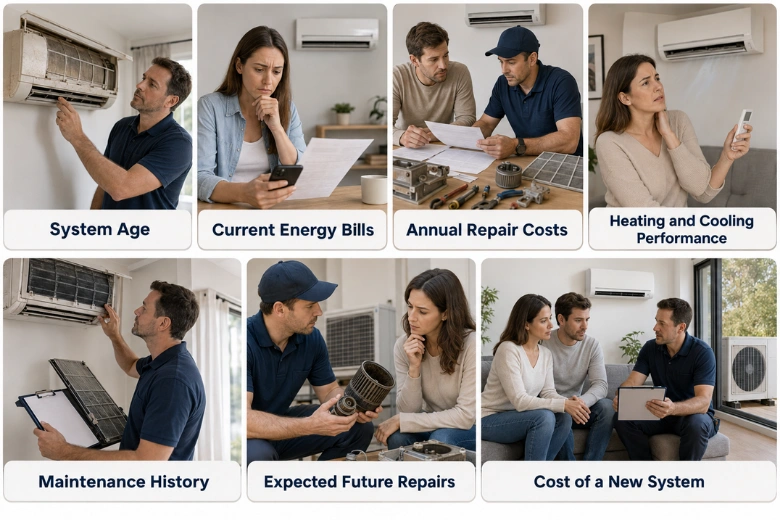
Replacing a heat pump is a significant decision, so it’s worth looking beyond one problem or one repair bill. Looking at the system’s age, performance, running costs, and repair history can give you a clearer idea of whether keeping your current heat pump is still worthwhile.
- System Age: An older heat pump may be closer to the end of its useful life, especially if other problems are starting to appear.
- Current Energy Bills: If electricity costs are increasing without a major change in usage, your heat pump may have become less efficient.
- Annual Repair Costs: Add up your recent repair expenses. Frequent or expensive repairs can make replacement a more practical option.
- Heating and Cooling Performance: Consider whether your heat pump still reaches and maintains your preferred temperature effectively.
- Maintenance History: A well-maintained system may continue working reliably for longer, while neglected maintenance can lead to earlier problems.
- Expected Future Repairs: If several components are showing signs of wear, consider the likelihood of further repair costs.
- Cost of a New System: Compare the purchase and installation cost of a replacement with the expected running and repair costs of keeping your current system.
Understanding How Long Does a Heat Pump Last? can help you decide whether your current system is approaching the point where replacement should be considered.
When Should You Contact a Heat Pump Professional?
Sometimes it’s difficult to tell whether a heat pump needs a simple repair or should be replaced. Getting professional advice can help identify the actual cause of the problem and prevent you from spending money on unnecessary repairs or replacing a system that could still be repaired.
- Heating or Cooling Performance Has Dropped: Your heat pump takes longer to reach the desired temperature or struggles to keep your home comfortable.
- Electricity Bills Have Increased: Your system is using more energy without a major change in household usage.
- The System Needs Frequent Repairs: Repeated breakdowns may indicate that the heat pump is becoming less reliable.
- Unusual Noises Continue: Grinding, rattling, buzzing, or loud vibrations should be checked before they lead to more serious damage.
- Error Codes Keep Appearing: Repeated warnings may indicate an underlying fault that needs professional diagnosis.
- The System Is Reaching the End of Its Lifespan: An older heat pump with declining performance may be better replaced than repeatedly repaired.
- You’re Considering Replacement: A professional can assess your current system and help you compare repair costs with the benefits of a new heat pump.
If you’re unsure whether your system needs repair or replacement, professional heat pump service NZ can help identify the problem and recommend the most suitable solution.
Conclusion
A heat pump doesn’t always need replacing when a problem appears, but several warning signs can indicate that replacement is worth considering. Poor heating or cooling, rising electricity bills, frequent repairs, unusual noises, repeated error codes, an ageing system, and increasing repair costs can all suggest that your current unit is no longer providing the best value. However, these issues don’t automatically mean you need a new system. Professional assessment can help determine whether repair or replacement makes more sense based on the system’s condition, efficiency, and future performance. The right replacement can improve comfort, energy efficiency, and reliability while reducing ongoing repair concerns.
Contact Clean Energy Solutions for professional advice, heat pump assessment, and installation guidance to find the right heating and cooling solution for your home.