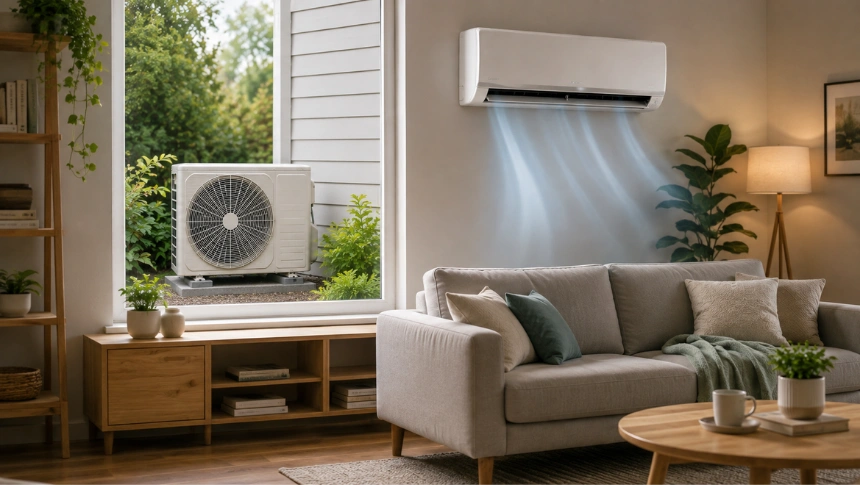

Coming home to a warm house when your heat pump should be cooling can be frustrating, especially when the system appears to be running but the air coming from the vents isn’t cool. You may also notice your electricity bills increasing as the heat pump works harder without giving you the comfort you expect.
The good news is that not every cooling problem means your heat pump needs major repairs. Something as simple as an incorrect setting, dirty filter, or blocked airflow could be affecting its performance, while other issues may need professional attention. Understanding How Does a Heat Pump Work? can make it easier to identify why your system may not be cooling properly. In this guide, we’ll cover common causes, simple checks you can try, and when it’s time to contact a professional.
Why Is My Heat Pump Not Cooling?
Several issues can cause a heat pump to stop cooling properly, and the problem isn’t always a major fault. Start by checking that the system is set to cooling mode and that the temperature is set correctly. Dirty air filters can restrict airflow, while leaves, dirt, or other debris around the outdoor unit can also affect performance. Poor airflow through blocked vents can make it harder for cool air to circulate around the room.
More serious issues, such as low refrigerant, electrical faults, or damaged components, usually require professional attention. An ageing heat pump may also become less efficient over time, particularly if it hasn’t received regular maintenance. Identifying the cause early can help restore cooling performance, prevent higher electricity use, and avoid more expensive repairs later.
Common Reasons Your Heat Pump Is Not Cooling
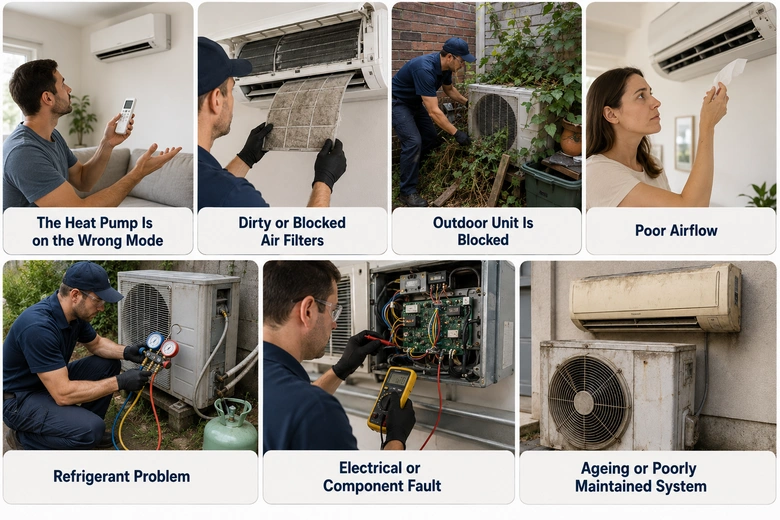
Checking the common causes below can help you understand what may be affecting your system.
Before arranging a service call, there are a few safe things you can check yourself. However, if the problem continues after these basic checks, avoid attempting complex repairs and have the system professionally inspected.
1. The Heat Pump Is on the Wrong Mode
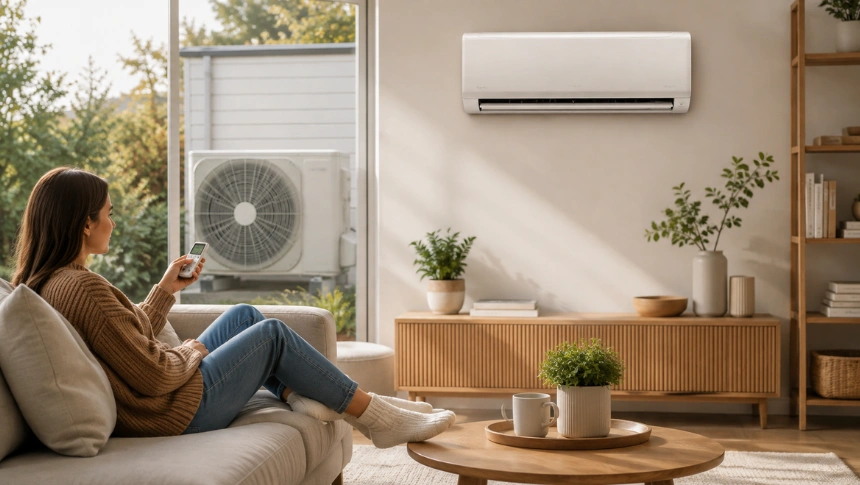
Before assuming there is a fault with your heat pump, check the settings on the remote or controller. Sometimes the system may be running normally but set to the wrong operating mode.
- Make sure the heat pump is set to the cooling or snowflake setting rather than heating.
- Avoid leaving the system on fan-only or an unsuitable automatic setting if you want active cooling.
- Set the temperature below the current room temperature so the system has a clear cooling target.
- After changing the settings, allow the system some time to start producing noticeably cooler air.
If the settings are correct but your heat pump still isn’t cooling, the problem may be related to airflow, components, or another system fault that needs further investigation.
2. Dirty or Blocked Air Filters
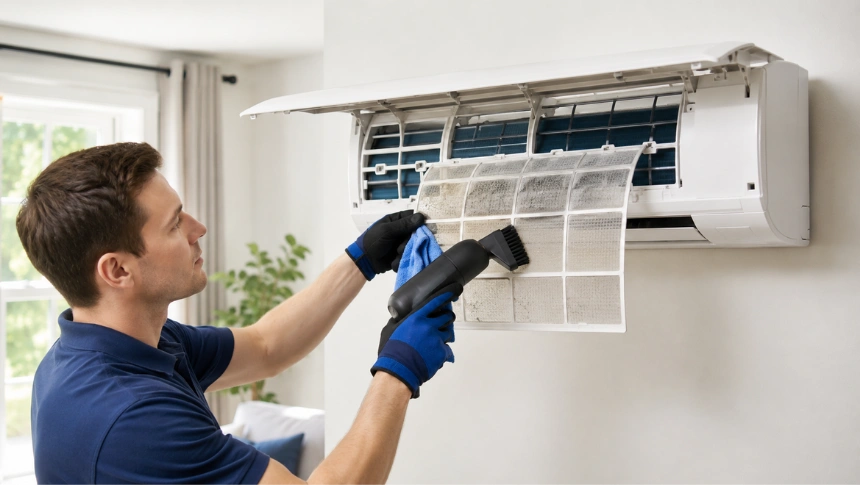
Dirty air filters are a common reason a heat pump may struggle to cool a room properly. When dust builds up on the filters, airflow becomes restricted, making it harder for the system to move cool air through the room and maintain the desired temperature.
- Inspect the filters for visible dust and dirt.
- Follow the manufacturer’s instructions for cleaning or replacing the filters.
- After cleaning, make sure the system is producing stronger, consistent airflow.
- Checking the filters regularly can help maintain cooling performance and reduce unnecessary strain on the system.
Regular cleaning can help maintain airflow, so follow our guide on How to Clean a Heat Pump for practical maintenance tips.
3. Outdoor Unit Is Blocked
The outdoor unit needs good airflow to remove heat from your home effectively. Leaves, grass, dirt, and other debris can build up around the unit and make it harder for the heat pump to cool properly.
- Remove leaves, grass, and other visible debris around the unit.
- Leave enough space around the outdoor unit for air to move freely.
- Don’t place furniture, storage items, plants, or other objects directly around the heat pump.
- Inspect the outdoor unit from time to time, particularly after windy or wet weather.
If the unit is clear but your heat pump still isn’t cooling properly, the issue may be related to another component and should be checked by a professional.
4. Poor Airflow
Even when the heat pump is working correctly, restricted airflow inside the home can prevent cool air from spreading effectively. This can leave rooms feeling warm while the system continues to run.
- Make sure vents are open and free from dust or obstructions.
- Keep sofas, curtains, and other items from blocking airflow.
- Make sure cool air has enough space to move around the room.
- Rooms that remain warm while others cool properly may indicate an airflow issue.
Improving airflow can help your heat pump distribute cool air more effectively and maintain a comfortable indoor temperature.
5. Refrigerant Problem
Refrigerant is an important part of the cooling process, so a low refrigerant level or leak can affect how well your heat pump cools your home. If the system is running but the air isn’t getting properly cool, a refrigerant issue could be one possible cause.
- Low refrigerant can make it difficult for the system to remove heat effectively.
- A refrigerant leak can cause the level to drop over time.
- Refrigerant should only be checked and handled by a qualified technician.
- Adding or handling refrigerant requires the right equipment and expertise.
6. Electrical or Component Fault
Cooling problems can also result from faults within important components of the heat pump. Sensors, fans, compressors, and electrical parts all play a role in keeping the system operating correctly.
- Incorrect readings can affect how the system operates.
- A faulty fan can reduce airflow and cooling performance.
- Problems with the compressor can significantly affect cooling.
- Error codes or warning lights can help identify a potential fault.
- Don’t attempt to open or repair electrical components yourself. Contact a qualified professional instead.
7. Ageing or Poorly Maintained System
An older heat pump may gradually lose efficiency, particularly if it has not received regular maintenance. Dust build-up, worn components, and repeated minor faults can all affect cooling performance over time.
- Older systems may require more energy to provide the same level of cooling.
- Repeated faults or repairs may indicate that the system is ageing.
- Regular cleaning and servicing can help keep the system operating efficiently.
- If cooling performance continues to decline, a professional can assess whether repair or replacement makes more sense.
It can also reduce the risk of a minor issue developing into a more expensive repair, so persistent cooling problems should be professionally checked.
What Can You Check Yourself?
Before calling a professional, there are a few simple checks you can safely carry out. These may help identify common causes of poor cooling without attempting any complex repairs.
- Check the Operating Mode: Make sure the heat pump is set to cooling mode, not heating or fan mode.
- Check the Temperature: Set the temperature below the current room temperature and give the system some time to respond.
- Clean the Filters: Inspect the filters for dust or dirt. Clean or replace them according to the manufacturer’s instructions.
- Check Airflow: Make sure indoor vents are open and aren’t blocked by furniture, curtains, or other objects.
- Inspect the Outdoor Unit: Remove visible leaves, grass, and debris around the unit to allow proper airflow.
- Check for Error Codes: Look at the display or remote for warning lights or error codes and refer to the manufacturer’s instructions.
Important: Don’t open electrical panels or attempt to handle refrigerant yourself. These jobs should be left to a qualified professional.
If these basic checks don’t improve the cooling, the problem may require professional diagnosis. Getting it checked early can help prevent further damage and unnecessary energy costs.
Does a Heat Pump Need Servicing If It Isn't Cooling?
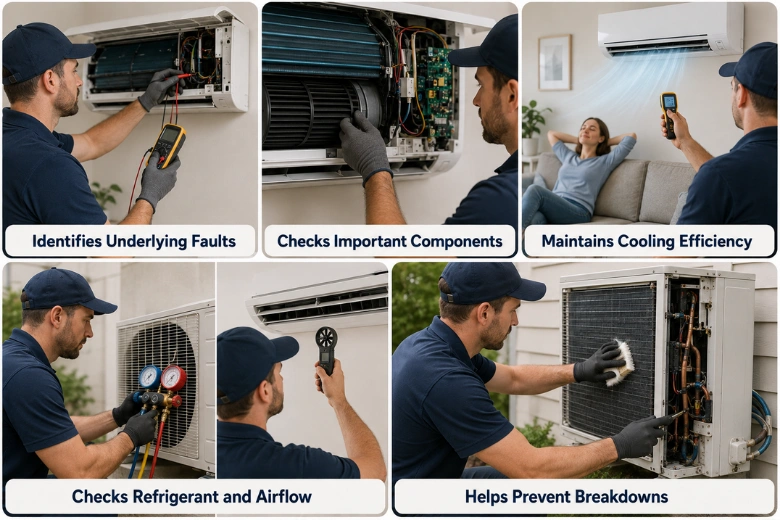
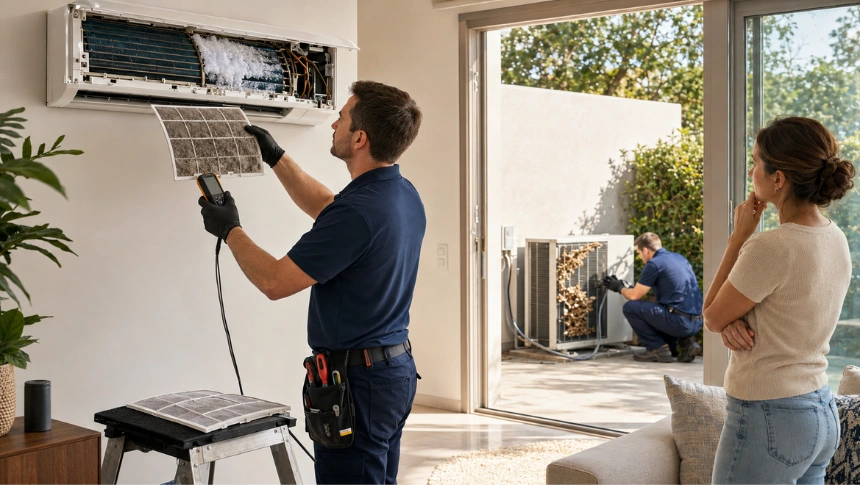
If basic troubleshooting hasn’t fixed the cooling problem, professional servicing can help find the actual cause. Continuing to run a heat pump that isn’t cooling properly may also increase energy use or allow a small fault to become more serious.
- Identifies Underlying Faults: A technician can investigate problems that aren’t visible during basic checks.
- Checks Important Components: Key parts can be inspected to make sure they are operating correctly.
- Maintains Cooling Efficiency: Proper servicing helps the system continue working efficiently.
- Checks Refrigerant and Airflow: A professional can identify issues that may be affecting cooling performance.
- Helps Prevent Breakdowns: Finding problems early can reduce the risk of unexpected repairs.
If your heat pump continues to struggle with cooling, professional heat pump service NZ can help identify the cause and restore reliable performance.
Professional servicing is particularly important when cooling problems continue, return frequently, or are accompanied by unusual noises, error codes, or other warning signs.
How to Prevent Heat Pump Cooling Problems
A few simple maintenance habits can help your heat pump cool more effectively and reduce the chance of unexpected problems. Regular care also helps prevent the system from working harder than necessary.
- Clean Air Filters Regularly: Check the filters for dust and clean or replace them as recommended by the manufacturer. Clean filters help maintain good airflow.
- Keep the Outdoor Unit Clear: Remove leaves, grass, dirt, and other debris around the outdoor unit so air can circulate freely.
- Don’t Block Indoor Vents: Keep furniture, curtains, and other objects away from vents to allow cool air to move properly around the room.
- Use the Correct Settings: Use the appropriate cooling mode and temperature setting to help the system operate efficiently.
- Schedule Regular Maintenance: Professional checks can identify worn components, airflow problems, and other issues before they affect cooling performance. Follow our Heat Pump Maintenance Checklist for practical steps to keep your system clean, efficient, and reliable.
Addressing small issues early can also reduce the risk of expensive repairs later.
Conclusion
If your heat pump is not cooling, the cause can range from a simple settings issue to a more serious system fault. Problems such as incorrect temperature settings, dirty filters, or blocked airflow can often be checked at home, while refrigerant issues, electrical faults, and damaged components require professional attention. Regular cleaning and maintenance can help your heat pump operate efficiently and reduce the risk of cooling problems developing over time. If your system continues to struggle with cooling, don’t ignore the issue, as delaying repairs can lead to higher energy use or more costly damage.
Contact Clean Energy Solutions for professional heat pump servicing, troubleshooting, and expert advice to restore reliable cooling and keep your system performing efficiently.