
Many homeowners consider a hot water heat pump because it offers an energy efficient way to reduce electricity costs, but one of the first questions they ask is, “How long will it last?” Since replacing a hot water system is a significant investment, it’s important to choose a solution that delivers reliable performance for many years. The lifespan of a hot water heat pump isn’t determined by age alone. Factors such as installation quality, regular maintenance, and daily usage all play an important role in how long the system continues to operate efficiently.
Investing in a quality Hot Water Heat Pump is easier when you understand how long it can last and how proper maintenance helps maximise its lifespan. In this guide, you’ll learn the average lifespan of a hot water heat pump, the factors that affect its durability, practical tips to extend its life, and the signs that indicate it may be time for a repair or replacement. This knowledge will help you make a confident decision and get the most value from your investment.
What Is the Average Lifespan of a Hot Water Heat Pump?
A hot water heat pump is built to provide reliable and energy efficient hot water for many years. On average, a well-maintained system lasts 10 to 15 years, although some high-quality models can continue operating for even longer with proper care. The actual lifespan depends on several factors, including the quality of the unit, how well it is installed, how often it is serviced, and the amount of daily hot water your household uses.
Compared to many traditional electric water heaters, which generally last around 8 to 12 years, a hot water heat pump often offers a longer service life while using significantly less electricity. However, no two systems are exactly the same. Homes with regular maintenance and professional installation are more likely to enjoy consistent performance and maximise the lifespan of their hot water heat pump.
- Typical Lifespan: Most hot water heat pumps last 10 to 15 years, with some lasting even longer when properly maintained.
- Manufacturer Expectations: Following the manufacturer’s maintenance and operating guidelines helps maximise the system’s lifespan.
- Importance of Maintenance: Regular servicing and cleaning improve efficiency, reduce wear, and help prevent costly repairs.
- Quality Installation: Professional installation ensures the system operates efficiently and supports long-term performance.
Choosing a quality system, ensuring professional installation, and following a regular maintenance schedule are the key factors that help maximise its lifespan and keep it operating efficiently for years to come.
Factors That Affect the Lifespan of a Hot Water Heat Pump
By understanding these factors and taking the right preventive measures, you can maximize your system’s lifespan, improve energy efficiency, and reduce the likelihood of costly repairs.
- Installation Quality: Correctly installed hot water heat pump operates more efficiently and experiences less strain on its components. Professional installation ensures proper positioning, adequate airflow, and correct system setup, all of which contribute to a longer lifespan.
- Frequency of Use: The amount of hot water your household uses each day can affect the system’s longevity. Homes with higher hot water demand may place more wear on the unit over time, making regular servicing even more important.
- Regular Maintenance: Routine maintenance helps keep the system operating efficiently. Cleaning the unit, checking for minor issues, and scheduling professional servicing can prevent unnecessary wear and extend the life of the heat pump.
- Water Quality: Water quality can have a significant impact on the system’s internal components. Hard water and mineral build-up may reduce efficiency and increase wear if left untreated for long periods.
- Climate and Environment: Outdoor conditions also play a role in the performance of a hot water heat pump. Good airflow, a clean installation area, and protection from excessive dirt, debris, or harsh weather help the system operate more efficiently.
- System Quality: The overall quality of the heat pump is another important factor. Systems manufactured by reputable brands are typically built with durable components and are designed to deliver reliable performance for many years when properly maintained.
Paying attention to these factors can help improve efficiency, minimise unexpected repairs, and ensure your system continues to provide reliable hot water for years to come.
Signs Your Hot Water Heat Pump Is Reaching the End of Its Lifespan
Recognising these warning signs early can help you avoid unexpected breakdowns, costly repairs, and interruptions to your hot water supply.
- Higher Electricity Bills: If your electricity bills continue to increase without a noticeable change in your household’s hot water usage, your heat pump may be losing efficiency. An aging system often needs more energy to produce the same amount of hot water.
- Reduced Hot Water Supply: Running out of hot water more quickly than usual or noticing inconsistent water temperatures may indicate that your system is no longer heating water efficiently. This is a common sign of wear in older units.
- Frequent Repairs: Needing regular repairs is often a sign that major components are reaching the end of their service life. If repair costs keep adding up, replacing the system may be a more cost-effective option.
- Unusual Noises: Grinding, rattling, buzzing, or other unusual sounds during operation can indicate worn or damaged internal components. These noises should be inspected by a qualified technician before they lead to more serious problems.
- Water Leaks: Water leaking around the unit should never be ignored. Leaks may result from damaged pipes, loose fittings, or corrosion within the system and can affect both performance and safety.
Addressing problems early can help you avoid unexpected failures and determine whether a repair or replacement is the best long-term solution.
How to Extend the Life of Your Hot Water Heat Pump
Few simple maintenance practices can improve performance, reduce wear, and help you avoid unnecessary repair costs.
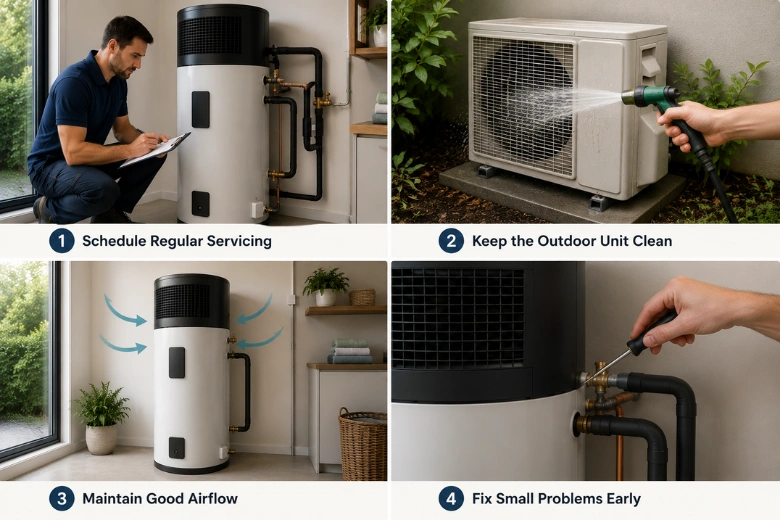
- Schedule Regular Servicing: Arrange professional servicing at the recommended intervals to keep your system running efficiently. Regular inspections can identify minor issues before they become major problems.
- Keep the Outdoor Unit Clean: Remove leaves, dust, and debris from around the outdoor unit to maintain proper airflow. A clean unit operates more efficiently and places less strain on its components.
- Maintain Good Airflow: Ensure there is enough open space around the heat pump for air to circulate freely. Blocked airflow can reduce efficiency and make the system work harder than necessary.
- Fix Small Problems Early: Don’t ignore unusual noises, leaks, or changes in performance. Addressing small issues promptly can prevent more expensive repairs and help extend the life of the system.
Follow the Manufacturer’s Maintenance Schedule
Always follow the maintenance recommendations provided by the manufacturer. Routine care helps maximise performance and supports the long-term reliability of your heat pump. For more maintenance tips, read our Hot Water Heat Pump Maintenance Checklist to keep your system operating at its best.
By following these simple maintenance practices, you can improve efficiency, reduce repair costs, and enjoy reliable hot water for many years.
When Should You Repair or Replace Your Hot Water Heat Pump?
Knowing when a repair is enough and when a replacement is the smarter investment can help you save money and avoid unexpected breakdowns.
When a Repair Is the Better Option
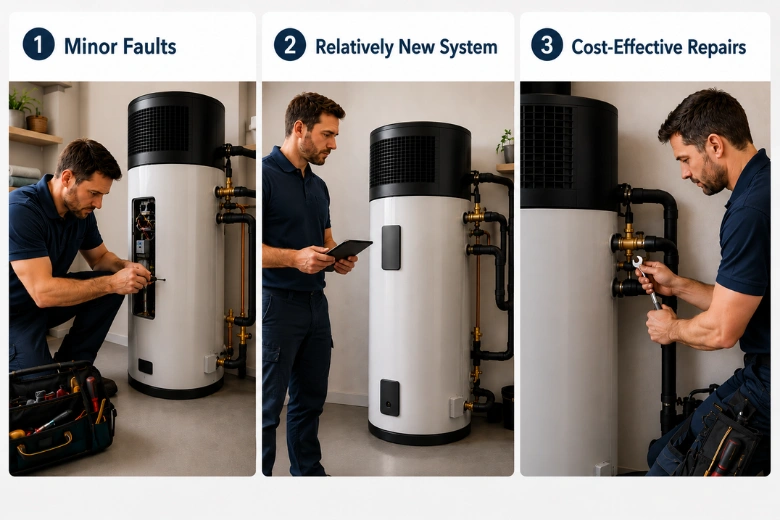
If your hot water heat pump is relatively new and the issue is minor, repairing it is often the most practical choice.
- Minor Faults: Small issues such as sensor faults, blocked filters, or minor leaks can usually be repaired quickly without replacing the entire system.
- Relatively New System: If your heat pump is less than 10 years old and has been well maintained, repairing it can help restore its performance and extend its lifespan.
- Cost-Effective Repairs: When the repair cost is reasonable and the system is still operating efficiently, fixing the problem is often better value than investing in a new unit.
When Replacement Makes More Sense
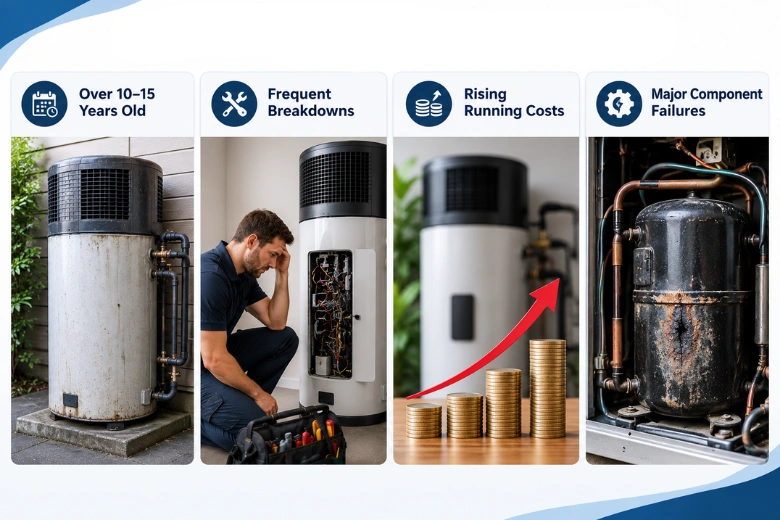
As a hot water heat pump gets older, replacing it may provide better long-term value than continuing with repeated repairs.
- Over 10–15 Years Old: Most hot water heat pumps are designed to last around 10 to 15 years. If your system is approaching or exceeding this age, replacing it may be a more reliable option.
- Frequent Breakdowns: If you’re calling for repairs regularly, the ongoing costs and inconvenience can quickly outweigh the benefits of keeping the existing unit.
- Rising Running Costs: An older heat pump that consumes more electricity than it once did may no longer be operating efficiently. A modern replacement can help reduce energy costs over time.
- Major Component Failures: If key components such as the compressor or storage tank fail, replacement is often more cost-effective than carrying out major repairs.
Professional inspection can help you determine the most cost-effective solution, ensuring you continue to enjoy reliable hot water while getting the best value from your investment.
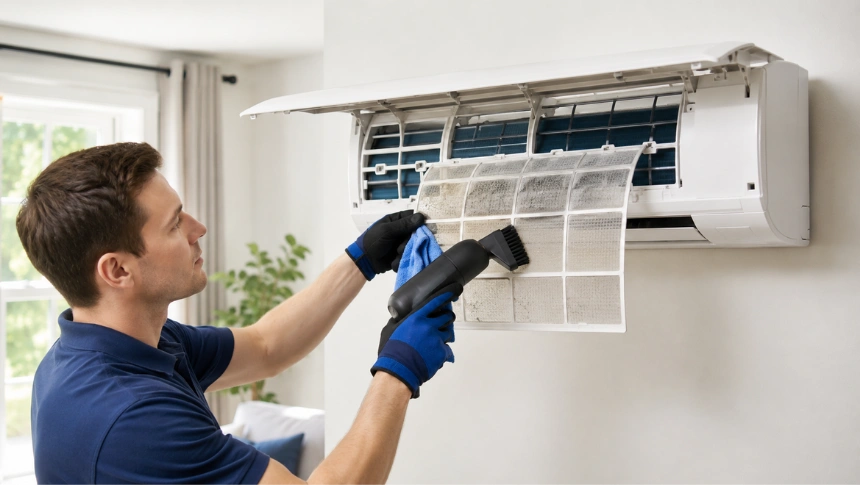
Benefits of Installing Your Heat Pump at the Correct Height
Installing your wall-mounted heat pump at the recommended height provides several advantages beyond simply heating or cooling your home. Proper installation helps the system perform more efficiently while improving comfort and reducing long-term operating costs.
Better Air Distribution: Proper installation allows warm and cool air to circulate evenly throughout the room.
Improved Energy Efficiency: The system works more efficiently when airflow is unrestricted, helping reduce electricity consumption.
Consistent Indoor Comfort: Correct placement helps eliminate hot and cold spots, creating a more comfortable living environment.
Lower Energy Bills: Improved efficiency means the heat pump requires less energy to maintain your desired temperature.
Longer Equipment Lifespan: Reduced strain on the system helps minimise wear and tear, extending the life of your heat pump.
Quieter Operation: Proper installation reduces unnecessary vibration and allows the unit to operate more quietly.
Does Regular Servicing Increase Lifespan?
Professional maintenance not only improves efficiency but also helps identify small issues before they develop into costly problems.
Benefits of Professional Servicing
Qualified technicians can inspect, clean, and test the system to ensure all components are working correctly. Regular servicing helps maintain reliable performance and gives you confidence that your heat pump is operating safely and efficiently.
Early Fault Detection
Routine inspections can identify worn parts, small leaks, or performance issues before they lead to major breakdowns. Fixing these problems early helps prevent unexpected failures and extends the life of the system.
Improved Efficiency
A clean and well-maintained heat pump uses less energy to heat water. This helps reduce electricity consumption while ensuring your household continues to receive a consistent supply of hot water.
Lower Repair Costs
Preventive maintenance can reduce the likelihood of expensive repairs by addressing minor issues before they become more serious. This can save you money over the long term.
Longer Operating Life
Regular servicing reduces unnecessary wear on important components, allowing the system to operate efficiently for longer. With proper care, many hot water heat pumps continue delivering reliable performance for years beyond their expected lifespan.
Learn more about improving performance and reducing energy use in our Hot Water Heat Pump Efficiency guide. By keeping your system well maintained, you can enjoy reliable hot water, lower running costs, and greater peace of mind for years to come.
Conclusion
A hot water heat pump is a reliable and energy efficient investment that can typically last 10 to 15 years with proper installation, regular servicing, and routine maintenance. Taking care of your system not only helps maximise its lifespan but also keeps it operating efficiently, reducing energy consumption and maintaining a consistent supply of hot water. Paying attention to early warning signs such as unusual noises, higher electricity bills, or reduced performance can also help prevent costly repairs and unexpected breakdowns.
Whether you need professional servicing, expert advice, or a new hot water heat pump installation, the experienced team at Clean Energy Solutions is here to help. Contact Us today to discuss your requirements and find the right solution to keep your home supplied with reliable, energy efficient hot water for years to come.