
Many homeowners across New Zealand are looking for ways to reduce rising electricity bills, and hot water heating is often one of the biggest contributors to household energy use. As a result, more people are considering energy efficient alternatives such as heat pump water heating. While you’ve probably heard about this technology, it’s common to wonder how it actually works and whether it’s the right choice for your home.
If you’re considering installing a Hot Water Heat Pump, understanding how it works can help you make a more confident decision and get the most value from your investment. Unlike traditional water heaters that generate heat directly, a hot water heat pump uses heat from the surrounding air to warm your water efficiently. In this guide, we’ll explain how the system works, why it’s so energy efficient, and the benefits it can offer for Auckland and New Zealand homes.
What is a Hot Water Heat Pump?
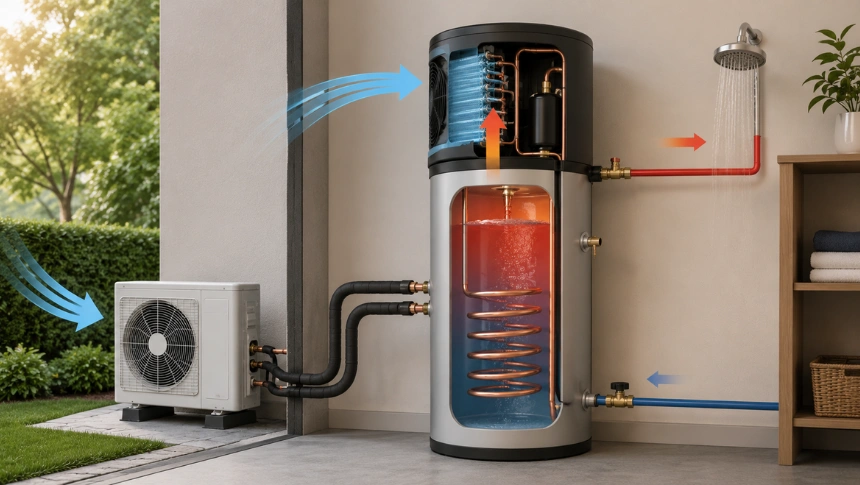
A hot water heat pump is an energy efficient system that heats water by capturing heat from the surrounding air instead of generating heat directly. It uses key components such as a fan, evaporator, compressor, condenser, and storage tank to transfer heat into the water. This process allows the system to produce hot water while using much less electricity than many traditional electric water heaters.
Unlike conventional water heaters that rely on electric elements or gas burners, a hot water heat pump makes use of existing heat in the air. This efficient way of heating water helps reduce energy consumption while still providing a reliable supply of hot water for everyday household use.
Key Features
- Uses Heat from Air: Instead of creating heat directly, the system captures warmth from the surrounding air and transfers it to the water.
- Energy Efficient: Using existing heat allows the system to consume less electricity, helping lower household energy costs.
- Reliable Hot Water: When properly sized, a hot water heat pump provides a steady supply of hot water for showers, laundry, and everyday household tasks.
- Suitable for NZ Homes: Modern systems are designed to perform efficiently in New Zealand’s changing weather conditions, making them suitable for many homes.
- Environmentally Friendly: Lower electricity consumption helps reduce carbon emissions, making a hot water heat pump a more sustainable water heating solution.
Want to learn why these systems use less electricity? Read our guide on Hot Water Heat Pump Efficiency to understand what makes them so energy efficient.
Understanding how it works can help homeowners make a smarter decision when choosing a long term hot water solution.
How Does a Hot Water Heat Pump Work?
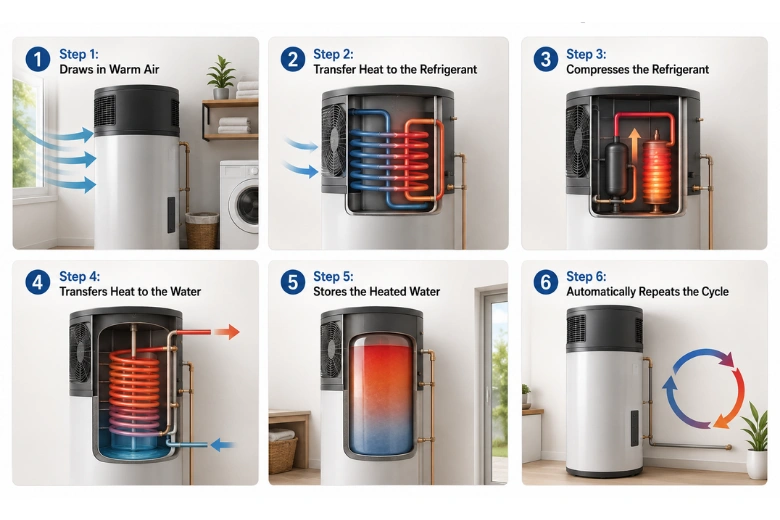
Many people assume a hot water heat pump generates heat in the same way as a traditional electric water heater, but it works very differently. Instead of creating heat directly, it captures heat from the surrounding air and transfers it into the water. This process uses much less electricity, making it one of the most energy efficient ways to produce hot water for your home.
Although the technology inside a hot water heat pump may sound advanced, the process is surprisingly simple. The system follows a continuous cycle that collects heat, increases its temperature, transfers it to the water, and then repeats the process whenever more hot water is needed.
Step 1: Draws in Warm Air
The process begins with a fan that pulls in air from the surrounding environment. Even when the weather feels cool, the air still contains heat energy that the system can use. This air passes over the evaporator coil, where the heat extraction process begins.
Unlike traditional water heaters that rely entirely on electricity or gas to create heat, a hot water heat pump makes use of naturally available heat in the air. This is one of the main reasons it uses significantly less energy.
Why this step matters:
- Uses freely available heat from the surrounding air
- Reduces electricity consumption
- Starts the energy efficient heating cycle
Step 2: Transfer Heat to the Refrigerant
Inside the evaporator is a special refrigerant that absorbs heat very easily. As the warm air passes over the coil, the refrigerant captures the heat and quickly changes from a liquid into a gas.
The refrigerant acts as the system’s heat carrier, moving the captured warmth through the heat pump without coming into contact with the household water supply.
Why this step matters:
- Efficiently captures heat from the air
- Transfers heat without wasting energy
- Keeps the heating process continuous
Step 3: Compresses the Refrigerant
The heated refrigerant gas then moves into the compressor, which is often considered the heart of the system. The compressor increases the pressure of the refrigerant, causing its temperature to rise even further.
By increasing both the pressure and temperature, the refrigerant now contains enough heat to warm the water stored in the tank.
Why this step matters:
- Increases the refrigerant temperature
- Creates enough heat to warm the water
- Improves overall system efficiency
Step 4: Transfers Heat to the Water
The hot refrigerant flows through the condenser, which is wrapped around or located inside the water storage tank. As it passes through, the heat moves from the refrigerant into the water, gradually raising the water temperature.
Once the refrigerant has transferred its heat, it cools down, returns to a liquid state, and moves back through the system to begin the cycle again.
Why this step matters:
- Efficiently heats the stored water
- Uses less electricity than conventional systems
- Provides consistent hot water for daily use
Step 5: Stores the Heated Water
After the water reaches the desired temperature, it is stored inside a well-insulated tank. The insulation helps keep the water hot for longer, reducing the need for the system to reheat it frequently.
Whenever you turn on a hot water tap, the heated water is supplied directly from the storage tank, ensuring a reliable supply for showers, washing dishes, laundry, and other household activities.
Why this step matters:
- Keeps hot water ready when needed
- Minimises unnecessary reheating
- Improves overall energy efficiency
Step 6: Automatically Repeats the Cycle
As hot water is used throughout the day, cooler water enters the storage tank. When the system detects that the water temperature has dropped below the set level, it automatically starts the heating cycle again.
This automatic operation means homeowners don’t need to manually switch the system on or off. The heat pump continuously works in the background to maintain a consistent supply of hot water whenever it is needed.
Why this step matters:
- Automatically maintains water temperature
- Provides reliable hot water throughout the day
- Maximises energy efficiency without extra effort
If you’re wondering how this system is installed in your home, read our Hot Water Heat Pump Installation Guide to learn what happens before, during, and after installation.
Understanding how each stage of this process works makes it easier to see why hot water heat pumps have become one of the most energy efficient water heating solutions for homes across Auckland and New Zealand.
Main Components of a Hot Water Heat Pump
Understanding these main components can help homeowners better appreciate how a hot water heat pump operates and why it is able to provide reliable hot water while using significantly less electricity than traditional water heating systems.
Evaporator Coil
The evaporator coil is where the heating process begins. As the fan draws in surrounding air, the evaporator absorbs the heat energy from that air using a refrigerant. Even when outdoor temperatures are relatively low, there is still enough heat available for the refrigerant to capture.
This component is essential because it allows the system to use naturally available heat instead of generating heat directly with electric elements, making the entire process far more energy efficient.
Compressor
Often referred to as the heart of the system, the compressor takes the refrigerant gas from the evaporator and compresses it. Compressing the refrigerant increases both its pressure and temperature, producing the high levels of heat needed to warm the water.
Although the compressor uses electricity to operate, it consumes much less energy than a traditional electric water heater because it is boosting existing heat rather than creating it from scratch.
Condenser
The condenser transfers the heat carried by the refrigerant into the water stored in the tank. As the hot refrigerant flows through the condenser, the heat moves into the water, increasing its temperature while the refrigerant cools and returns to a liquid state.
This efficient heat exchange process ensures the water heats quickly while keeping electricity consumption low.
Storage Tank
Once the water has been heated, it is stored inside a heavily insulated storage tank. The insulation helps retain heat for longer periods, reducing the need for frequent reheating and improving overall energy efficiency.
The storage tank ensures hot water is readily available whenever it is needed for showers, washing dishes, laundry, or other everyday household activities.
Expansion Valve
The expansion valve regulates the flow of refrigerant throughout the system. After the refrigerant has released its heat inside the condenser, the valve lowers its pressure and temperature before sending it back to the evaporator.
This controlled process prepares the refrigerant to absorb more heat from the surrounding air, allowing the heating cycle to continue efficiently.
Fan
The fan continuously draws air from the surrounding environment and directs it across the evaporator coil. Without a consistent airflow, the system would not be able to collect enough heat for efficient operation.
Modern hot water heat pumps are designed with quiet, energy efficient fans that provide a steady airflow while minimising noise and power consumption.
Understanding their functions helps homeowners see why hot water heat pumps are a dependable, energy efficient solution for reducing electricity costs without compromising on comfort.
Common Myths About Hot Water Heat Pumps
As hot water heat pumps become more popular, there are still several misconceptions about how they work and what they can do. Understanding the facts behind these common myths can help you make a more informed decision when choosing an energy efficient hot water system.
Myth: They only work in summer.
Fact: Modern hot water heat pumps are designed to operate throughout the year, including during New Zealand’s cooler months. They continue to extract heat from the surrounding air even when outdoor temperatures are low, ensuring a reliable supply of hot water.
Myth: They don’t produce enough hot water.
Fact: A properly sized hot water heat pump can comfortably meet the daily hot water needs of most households. Choosing the right system capacity based on the number of people in your home helps ensure you always have enough hot water for showers, laundry, and other daily activities.
Myth: They use a lot of electricity.
Fact: Hot water heat pumps use significantly less electricity than traditional electric water heaters because they transfer existing heat from the air instead of generating heat directly. This makes them one of the most energy efficient hot water solutions available.
Myth: They’re difficult to maintain.
Fact: Hot water heat pumps require relatively little maintenance. Simple tasks such as keeping the unit clean, ensuring good airflow around the system, and arranging professional servicing when recommended can help maintain efficiency and extend the system’s lifespan.
By understanding how these systems really work, homeowners can feel more confident choosing an efficient, reliable, and environmentally friendly hot water solution that delivers long term energy savings.
When Should You Contact Professionals?
Choosing the right hot water heat pump is easier with expert advice. Here are some situations where it’s best to contact a professional.
- Need System Advice: Get expert recommendations to choose the right system for your household’s hot water needs.
- Replacing an Existing Water Heater: Upgrade your old or inefficient water heater with a more energy efficient solution.
- Planning a New Build: Ensure your hot water system is correctly designed and installed from the beginning.
- Want Lower Energy Bills: Receive advice on selecting a system that can help reduce long-term electricity costs.
- Need Professional Installation: Proper installation helps maximise efficiency, performance, and the lifespan of your system.
Whether you’re replacing an existing system or installing one in a new home, expert guidance helps you get the best long-term results.
Conclusion
A hot water heat pump is a smart and energy efficient way to heat water by transferring heat from the surrounding air instead of generating it directly like a traditional electric water heater. This innovative process uses less electricity while still providing a reliable supply of hot water for your everyday household needs. As a result, many homeowners across New Zealand are choosing hot water heat pumps to reduce energy bills, lower their environmental impact, and enjoy long-term savings.
Whether you’re replacing an existing water heater or installing a system in a new home, a hot water heat pump is a worthwhile investment. Contact Clean Energy Solutions today for expert advice, professional installation, and a solution tailored to your home’s hot water requirements.