
A wall-mounted heat pump is one of the most efficient ways to keep your home comfortable in every season. It provides both heating and cooling while using less energy than many traditional systems. However, installing the unit in the right position is just as important as choosing the right model. The wall-mounted heat pump installation height plays a key role in ensuring proper airflow, maintaining a consistent indoor temperature, and helping your system operate at its best.
Installing the indoor unit too high, too low, or in the wrong location can reduce its performance and increase energy consumption. Factors such as room size, ceiling height, furniture placement, and airflow all influence how effectively your heat pump heats or cools your space. Choosing the correct installation height can improve comfort, lower running costs, and extend the lifespan of your system.
In this guide, we’ll explain the recommended installation height for a wall-mounted heat pump, the factors to consider before installation, the best placement for indoor and outdoor units, common installation mistakes to avoid, and why professional installation is the best way to maximize your heat pump’s performance.
What Is a Wall-Mounted Heat Pump?
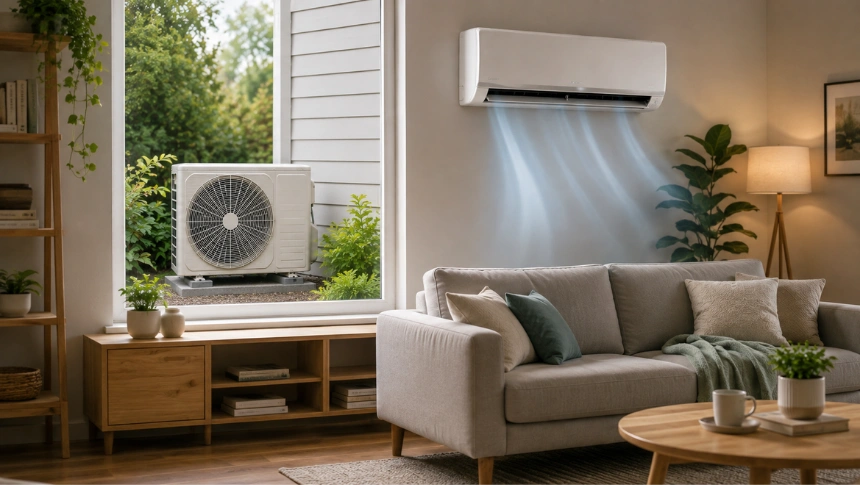
A wall-mounted heat pump is an energy-efficient heating and cooling system that helps maintain a comfortable indoor temperature throughout the year. It consists of two main components: an indoor unit mounted high on a wall and an outdoor unit installed outside the building. These units work together to transfer heat rather than generate it, making heat pumps a cost-effective and environmentally friendly solution for both heating and cooling.
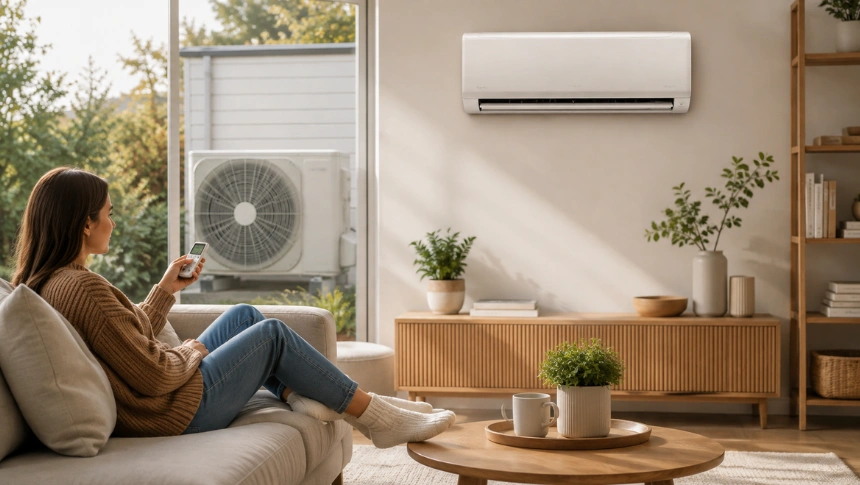
Unlike traditional heating systems, a wall-mounted heat pump can warm your home during winter and cool it during summer using the same system. This dual functionality makes it a popular choice for homes, apartments, offices, and small commercial spaces. Modern heat pumps are also known for their quiet operation, energy efficiency, and ability to provide consistent indoor comfort.
To achieve the best performance, proper installation is essential. The wall-mounted heat pump installation height directly affects airflow, temperature distribution, and overall system efficiency. Installing the unit at the recommended height and in the right location helps maximise comfort, reduce energy consumption, and extend the lifespan of your heat pump.
Why Is Installation Height So Important?
The height at which a wall-mounted heat pump is installed has a significant impact on its overall performance. Proper installation helps the system distribute warm and cool air evenly throughout the room, creating a comfortable indoor environment while improving energy efficiency. Installing the unit too high or too low can restrict airflow, cause uneven temperatures, and make the system work harder than necessary.
Choosing the correct wall-mounted heat pump installation height also helps reduce energy consumption and supports the long-term performance of your system. Here are some of the key benefits of installing your heat pump at the recommended height.
Better Airflow
A correctly positioned indoor unit allows air to circulate freely throughout the room. This ensures warm or cool air reaches every corner of the space, helping maintain a consistent indoor temperature.
Improved Energy Efficiency
When airflow is not blocked and the unit is installed at the proper height, your heat pump doesn’t have to work as hard to heat or cool the room. This can reduce energy usage and help lower your electricity bills.
More Comfortable Indoor Temperatures
Proper installation helps eliminate hot and cold spots by distributing air more evenly. This creates a more comfortable living or working environment throughout the year.
Longer System Lifespan
A heat pump that operates efficiently experiences less strain on its components. Proper installation can reduce wear and tear, helping extend the lifespan of the system while minimising maintenance needs.
Better Overall Performance
Following the recommended installation height allows your wall-mounted heat pump to perform as designed. It improves heating and cooling efficiency, supports reliable operation, and helps you get the most value from your investment.
What Is the Recommended Height for a Wall-Mounted Heat Pump?
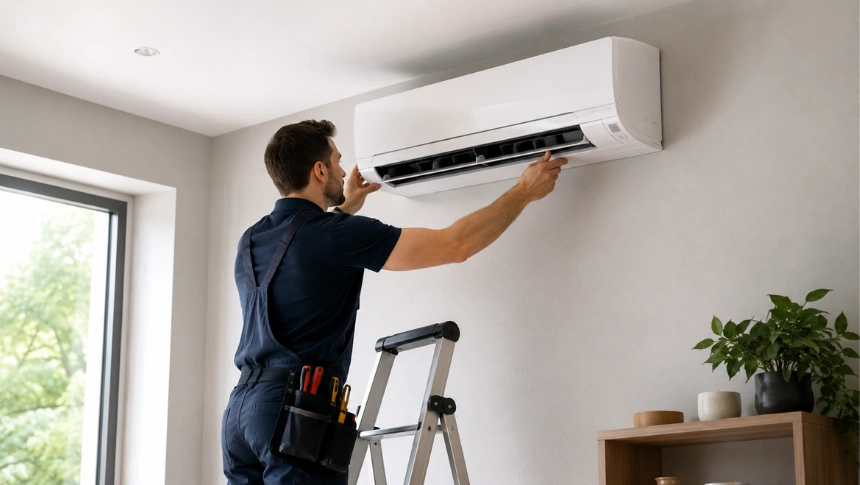
Installing your wall-mounted heat pump at the correct height is essential for achieving the best heating and cooling performance. In general, HVAC manufacturers recommend mounting the indoor unit between 2 and 2.6 metres (approximately 6.5 to 8.5 feet) above the floor. This height allows air to circulate more effectively throughout the room, helping maintain a consistent indoor temperature while improving energy efficiency.
Although these recommendations work well for most homes, the ideal installation height may vary depending on the room type, ceiling height, and overall layout. Choosing the right position ensures unobstructed airflow, better comfort, and optimal system performance.
Recommended Installation Height by Room
| Room Type | Recommended Installation Height |
|---|---|
| Living Room / Open-Plan Area | 7.5–8.5 feet (2.3–2.6 metres) |
| Bedroom | 6.5–7.5 feet (2.0–2.3 metres) |
| Home Office / Small Room | 6.5–7 feet (2.0–2.1 metres) |
Why Following the Recommended Height Matters
Installing a wall-mounted heat pump within the recommended height range offers several important benefits:
- Improves Airflow: Allows warm and cool air to circulate evenly throughout the room.
- Increases Energy Efficiency: Helps the system heat and cool your home more effectively while using less energy.
- Enhances Indoor Comfort: Reduces hot and cold spots by providing more balanced temperature distribution.
- Supports Long-Term Performance: Minimises unnecessary strain on the system, helping extend its lifespan.
- Ensures Manufacturer-Recommended Operation: Proper installation helps your heat pump perform as intended and may support warranty requirements.
Factors to Consider Before Installing a Wall-Mounted Heat Pump
While the recommended installation height provides a good starting point, every home is different. Factors such as room size, ceiling height, furniture placement, and airflow can all affect how well your wall-mounted heat pump performs. Considering these factors before installation will help improve efficiency, maximise comfort, and ensure long-term reliability.
Ceiling Height
The height of your ceiling plays an important role in determining where your heat pump should be installed. In rooms with high or vaulted ceilings, mounting the unit too high can make it harder for warm air to circulate effectively. Installing the indoor unit within the manufacturer’s recommended height range helps maintain even airflow and consistent temperatures.
Room Size and Layout
The size and layout of your room influence how air moves throughout the space. Large open-plan areas may require careful positioning to distribute air evenly, while smaller rooms often perform best when the unit is centrally located. Choosing the right position helps eliminate hot and cold spots.
Sunlight and Room Orientation
Rooms that receive direct sunlight during the day may require different placement to maintain efficient cooling. Avoid installing the indoor unit directly opposite large windows where it may be exposed to excessive heat. Positioning the unit on an interior wall often provides more balanced temperature control.
Furniture and Obstructions
Large furniture, curtains, shelves, or decorative items can block airflow and reduce your heat pump’s performance. Ensure there is enough open space around the indoor unit so air can circulate freely throughout the room.
Airflow Direction
The indoor unit should be positioned so conditioned air can flow naturally across the room. Avoid directing airflow toward walls, corners, or large obstacles, as this can reduce heating and cooling efficiency.
Wall Strength and Accessibility
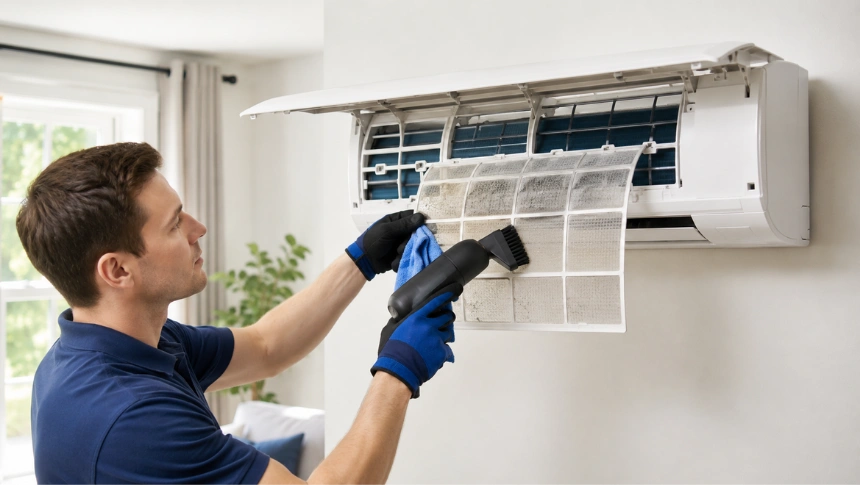
A wall-mounted heat pump should always be installed on a strong, stable wall that can safely support its weight. The location should also provide enough space for routine servicing, cleaning, and maintenance, helping keep the system operating efficiently for years to come.
Best Location to Install a Wall-Mounted Heat Pump
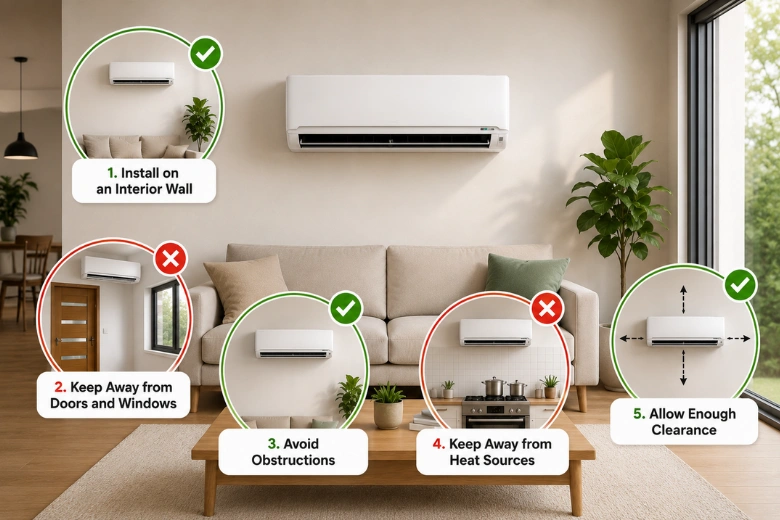
Choosing the right location for your wall-mounted heat pump is just as important as installing it at the correct height. Proper placement improves airflow, increases energy efficiency, and helps maintain a comfortable indoor temperature throughout your home. Here are some best practices to consider.
Install on an Interior Wall
An interior wall is often the best location because it allows air to circulate evenly throughout the room. Avoid placing the unit on walls that receive excessive direct sunlight, as this can affect temperature readings and system performance.
Keep Away from Doors and Windows
Installing the unit near frequently opened doors or large windows may allow warm or cold air to escape, forcing the heat pump to work harder. Choose a location where outside air has minimal impact on indoor temperature.
Avoid Obstructions
Curtains, tall furniture, shelves, and decorative items can block airflow. Leave enough open space around the indoor unit so conditioned air can circulate freely.
Keep Away from Heat Sources
Avoid installing the unit near fireplaces, ovens, televisions, or other appliances that generate heat. These heat sources may interfere with the heat pump’s temperature sensor and reduce efficiency.
Allow Enough Clearance
Always maintain the manufacturer’s recommended clearance above, below, and on both sides of the unit. Proper clearance improves airflow and provides easier access for maintenance and cleaning.
Benefits of Installing Your Heat Pump at the Correct Height
Installing your wall-mounted heat pump at the recommended height provides several advantages beyond simply heating or cooling your home. Proper installation helps the system perform more efficiently while improving comfort and reducing long-term operating costs.
Better Air Distribution: Proper installation allows warm and cool air to circulate evenly throughout the room.
Improved Energy Efficiency: The system works more efficiently when airflow is unrestricted, helping reduce electricity consumption.
Consistent Indoor Comfort: Correct placement helps eliminate hot and cold spots, creating a more comfortable living environment.
Lower Energy Bills: Improved efficiency means the heat pump requires less energy to maintain your desired temperature.
Longer Equipment Lifespan: Reduced strain on the system helps minimise wear and tear, extending the life of your heat pump.
Quieter Operation: Proper installation reduces unnecessary vibration and allows the unit to operate more quietly.
Where Is the Ideal Place to Install Indoor and Outdoor Heat Pump Units?
The location of your indoor and outdoor heat pump units has a direct impact on system performance, energy efficiency, and long-term reliability. Choosing the right installation spot helps improve airflow, maintain consistent temperatures, and reduce unnecessary strain on the system.
Indoor Unit Placement
For the best heating and cooling performance, install the indoor unit:
- On a strong, stable interior wall.
- At the manufacturer’s recommended installation height.
- In a central location for even air distribution.
- Away from doors and windows to minimise heat loss and drafts.
- Out of direct sunlight to prevent inaccurate temperature readings.
- Away from heat-producing appliances, such as ovens, fireplaces, or televisions.
- Clear of curtains, shelves, tall furniture, and other obstructions that may block airflow.
- With enough clearance around the unit to allow proper airflow and easy maintenance.
Outdoor Unit Placement
To ensure efficient operation, install the outdoor unit:
- On a solid, level surface or a secure mounting bracket.
- At least 12 inches (30 cm) above the ground to protect it from rainwater, snow, and debris.
- In an area with good ventilation and unrestricted airflow.
- Away from plants, fences, and walls that may obstruct airflow.
- In a location that is easy to access for servicing and maintenance.
- Away from areas where excessive dust, leaves, or debris can accumulate.
- Protected from strong winds where possible, while still allowing adequate ventilation.
- With sufficient space around the unit, following the manufacturer’s clearance recommendations.
Choosing the right location for both the indoor and outdoor units helps maximise energy efficiency, improve indoor comfort, reduce maintenance issues, and extend the lifespan of your wall-mounted heat pump.
Common Installation Mistakes to Avoid
Avoiding common installation mistakes can help improve your heat pump’s performance and reduce future maintenance costs.
Installing Too Close to the Ceiling: This can restrict airflow and reduce heating and cooling efficiency.
Mounting the Unit Too Low: Installing the unit below the recommended height may prevent air from circulating properly.
Blocking Airflow: Furniture, curtains, shelves, or decorative items placed in front of the unit can reduce airflow and system performance.
Installing Near Heat Sources: Placing the unit near fireplaces, ovens, or other heat-producing appliances can affect temperature readings.
Ignoring Manufacturer Guidelines: Every heat pump model has specific installation requirements. Following the manufacturer’s instructions helps ensure safe and efficient operation.
Poor Outdoor Unit Placement: Installing the outdoor unit in an enclosed or poorly ventilated area can reduce efficiency and increase wear on the system.
Why Choose Professional Heat Pump Installation?
Although installing a wall-mounted heat pump may appear straightforward, proper installation requires technical expertise and careful planning. A qualified HVAC technician will assess your home’s layout, recommend the ideal installation height and location, and ensure the system is installed according to manufacturer guidelines.
Professional installation helps maximise energy efficiency, improve system performance, and reduce the risk of future problems. It also ensures correct electrical connections, proper refrigerant handling, and safe operation. By choosing experienced professionals, you can enjoy reliable heating and cooling, lower energy costs, and greater peace of mind.
Conclusion
Choosing the correct wall-mounted heat pump installation height is essential for achieving the best heating and cooling performance. Proper placement improves airflow, increases energy efficiency, enhances indoor comfort, and helps extend the lifespan of your system. By considering factors such as room layout, ceiling height, and airflow, you can ensure your heat pump operates at its full potential.
If you’re planning to install a new wall-mounted heat pump or replace an existing system, professional guidance can make all the difference. Contact our experienced team today to discuss your installation requirements or book a consultation for expert advice and a hassle-free installation.