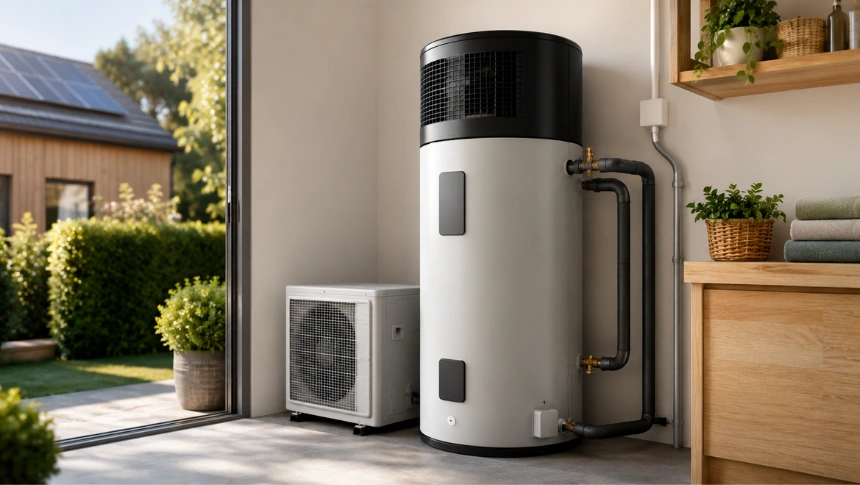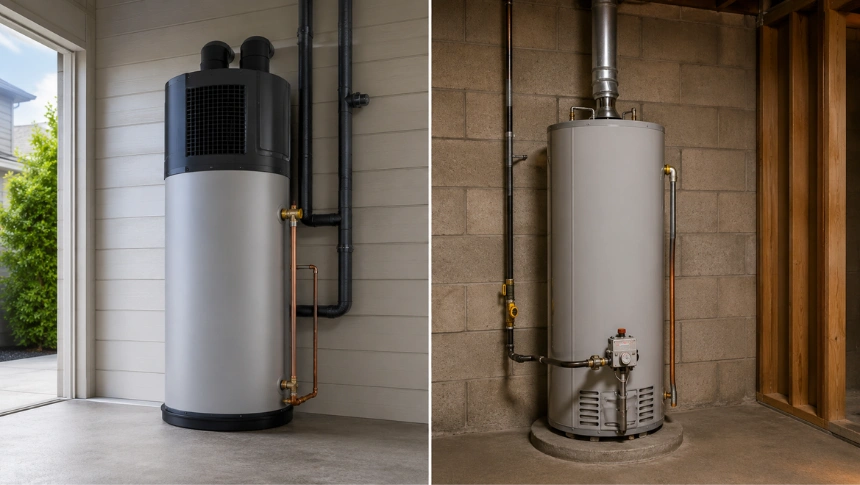

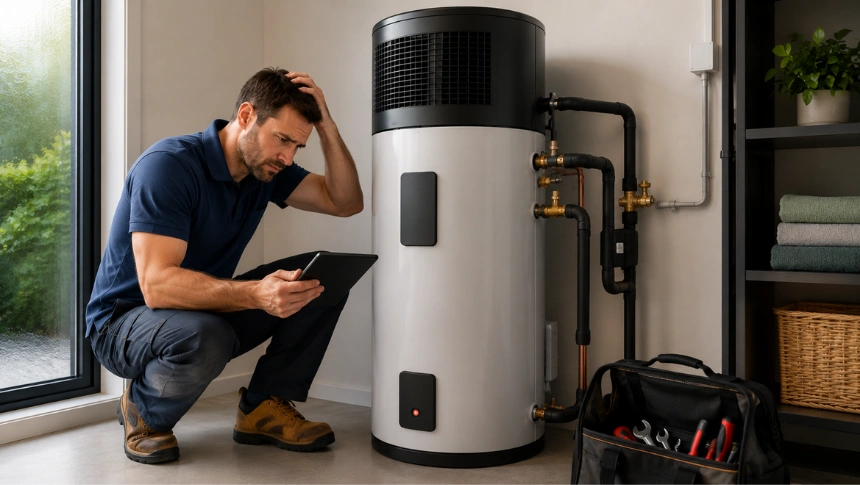
Like any home appliance, a hot water heat pump can experience problems as it gets older or if it isn’t properly maintained. While some issues, such as incorrect settings or restricted airflow, can be resolved with simple checks, others may require professional servicing. Ignoring early warning signs can reduce energy efficiency, increase electricity bills, and lead to more expensive repairs or even premature system replacement.
Keeping your Hot Water Heat Pump in good condition starts with recognising common problems early and knowing when professional servicing is the best solution. In this guide, we’ll explore the most common hot water heat pump problems, what causes them, practical troubleshooting tips, and when it’s time to call an expert. Understanding these issues can help you keep your system running efficiently, avoid unexpected breakdowns, and enjoy reliable hot water all year round.
Why Do Hot Water Heat Pump Problems Occur?
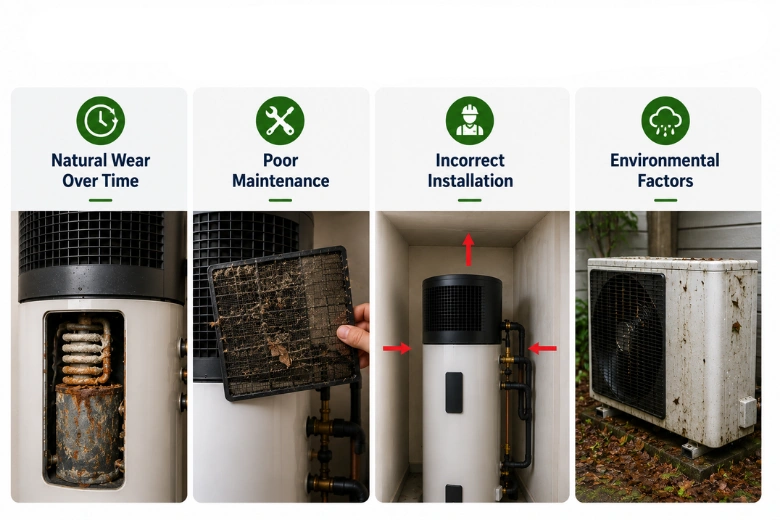
Hot water heat pumps are built to provide reliable hot water for many years, but problems can occur due to normal wear, poor maintenance, incorrect installation, or environmental conditions.
Understanding these common causes helps you identify issues early, reduce repair costs, maintain energy efficiency, and extend the lifespan of your hot water heat pump.
- Natural Wear Over Time: As the system ages, its components gradually experience wear from regular use. Over time, this can affect performance and reduce overall efficiency.
- Poor Maintenance: Skipping routine servicing or neglecting basic maintenance can allow small issues to develop into larger problems, increasing the risk of breakdowns and higher operating costs.
- Incorrect Installation: Hot water heat pump that is not installed correctly may struggle to operate efficiently. Poor positioning, restricted airflow, or improper setup can place unnecessary strain on the system.
- Environmental Factors: Outdoor units are exposed to dust, leaves, moisture, and changing weather conditions. Without proper care, these environmental factors can affect the system’s performance over time.
Understanding these factors allows you to spot potential issues early, helping your system run efficiently, reducing repair costs, and ensuring reliable hot water for years to come.
Common Hot Water Heat Pump Problems and How to Fix Them
Understanding the cause of each problem can help you respond quickly, prevent further damage, and keep your system operating efficiently.
No Hot Water
If your hot water heat pump suddenly stops producing hot water, don’t assume the entire system has failed. In many cases, the problem is caused by a simple issue that can be identified before calling a technician.
Possible Causes
- Power supply interruption
- Tripped circuit breaker
- Incorrect thermostat settings
- Faulty compressor or heating component
What You Can Check
- Make sure the unit has power.
- Check if the circuit breaker has tripped.
- Confirm the temperature setting hasn’t been changed.
- Look for any error codes displayed on the system.
When to Call a Professional
If the system still isn’t producing hot water after these checks or continues displaying an error, arrange a professional inspection to identify and repair the fault.
Water Is Not Hot Enough
If your water isn’t as hot as usual, the system may still be operating but not at its full efficiency. Identifying the cause early can help restore normal performance and prevent further issues.
Possible Causes
- Low temperature setting
- High household hot water usage
- Dirty air filter or blocked airflow
- Internal component issues
What You Can Check
- Verify the temperature setting.
- Consider whether multiple people have recently used hot water.
- Check that the outdoor unit is clean and free from debris.
When to Call a Professional
If the water remains lukewarm despite normal usage and correct settings, have the system professionally inspected.
Higher Electricity Bills
An increase in electricity bills without a change in your hot water usage often indicates that the heat pump is working harder than necessary. Reduced efficiency can gradually increase operating costs.
Possible Causes
- Reduced system efficiency
- Lack of regular maintenance
- Ageing components
- Restricted airflow
What You Can Check
- Compare your recent electricity bills.
- Inspect the outdoor unit for dirt or obstructions.
- Check when the system was last serviced.
When to Call a Professional
If energy consumption continues to increase, a technician can inspect the system and restore its efficiency.
Unusual Noises
A hot water heat pump should operate quietly. New or louder sounds usually indicate that one or more components require attention.
Possible Causes
- Loose internal components
- Fan motor issues
- Compressor problems
What You Can Check
- Identify where the noise is coming from.
- Check if any debris is touching the outdoor unit.
- Listen for changes in the sound during operation.
When to Call a Professional
If grinding, rattling, or buzzing noises continue, stop ignoring them and arrange a professional inspection before further damage occurs.
Water Leaks
Water around the unit doesn’t always mean the system has failed, but it should never be ignored. Identifying the source of the leak early can prevent damage to both the system and your property.
Possible Causes
- Loose pipe fittings
- Normal condensation
- Damaged pipes or seals
- Internal leaks
What You Can Check
- Determine whether it’s condensation or a continuous leak.
- Inspect visible pipe connections.
- Check if water is pooling around the unit.
When to Call a Professional
If the leak continues or becomes worse, contact a technician to locate the source and complete the necessary repairs.
Bad Odours
Unpleasant smells from your hot water heat pump often indicate that the system needs cleaning or maintenance. Addressing the issue early helps maintain both efficiency and hygiene.
Possible Causes
- Dirt and dust build-up
- Bacteria or mould
- Lack of routine maintenance
What You Can Check
- Look for visible dirt around the outdoor unit.
- Check whether the odour appears every time the system runs.
- Clean accessible external areas if recommended by the manufacturer.
When to Call a Professional
If the smell doesn’t disappear after basic cleaning, arrange professional servicing to identify and resolve the cause.
Error Codes or Warning Lights
Modern hot water heat pumps use warning lights or error codes to alert you when the system detects a fault. These alerts should never be ignored, even if the system appears to be working.
Possible Causes
- Sensor faults
- Electrical issues
- System component failures
- Temporary operating faults
What You Can Check
- Refer to your user manual to identify the error code.
- Restart the system only if recommended by the manufacturer.
- Note the code before contacting a technician.
When to Call a Professional
If the warning light remains on or the error code returns after restarting the system, contact a qualified technician for diagnosis and repair.
Performing basic checks, scheduling regular maintenance, and seeking professional assistance when needed can help keep your system running efficiently, reduce repair costs, and ensure you continue to enjoy reliable hot water for years to come.
Troubleshooting Tips Before Calling a Professional
Performing a few simple checks can help identify minor issues, restore normal operation, and save you time and unnecessary service costs.
Check the Power Supply
A power interruption is one of the most common reasons a hot water heat pump stops working.
What to Check
- Ensure the unit is switched on.
- Check if the circuit breaker has tripped.
- Confirm there isn’t a power outage affecting your home.
Inspect Temperature Settings
Incorrect temperature settings can make it seem like the system isn’t heating water properly.
What to Check
- Verify the thermostat is set to your preferred temperature.
- Make sure the settings haven’t been changed accidentally.
- Allow enough time for the system to heat the water after adjusting the temperature.
Look for Blocked Airflow
Hot water heat pumps rely on good airflow to operate efficiently. Restricted airflow can reduce performance and increase energy consumption.
What to Check
- Remove leaves, dirt, or debris around the outdoor unit.
- Ensure there is enough space around the system for proper airflow.
- Check that the air vents are not blocked.
Check for Visible Leaks
Small leaks can sometimes be spotted before they develop into more serious problems.
What to Check
- Look for water pooling around the unit.
- Inspect visible pipe connections for leaks.
- Determine whether the moisture is normal condensation or a continuous leak.
Reset the System (If Recommended by the Manufacturer)
Some temporary faults can be resolved by restarting the system, but this should only be done according to the manufacturer’s instructions.
What to Check
- Refer to the user manual before resetting the unit.
- Avoid repeatedly resetting the system if the same error returns.
- Note any error codes before restarting, as they can help with diagnosis if professional servicing is required.
If your hot water heat pump still isn’t operating correctly after completing these checks, it’s best to contact a qualified technician to ensure the issue is diagnosed and repaired safely.
How to Prevent Common Hot Water Heat Pump Problems
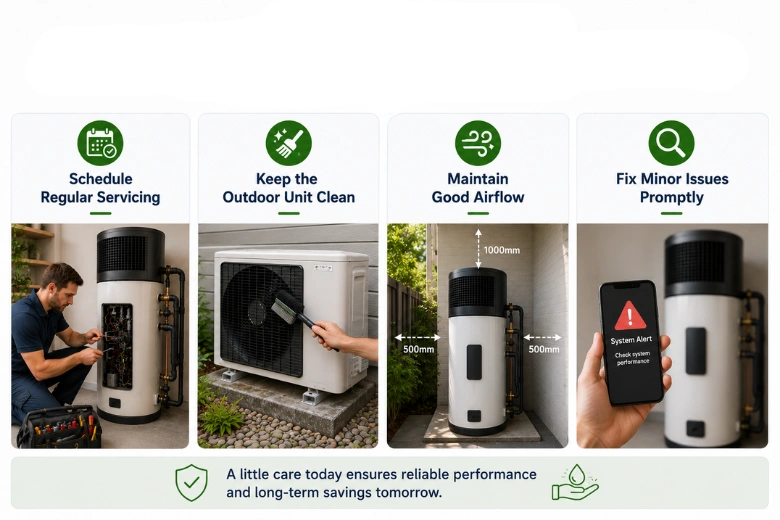
By following a few simple maintenance practices, you can keep your hot water heat pump running efficiently, reduce the risk of breakdowns, and extend its lifespan.
Schedule Regular Servicing
Professional servicing helps identify worn components and potential issues before they become major problems. Regular inspections also ensure your system continues to operate safely and efficiently.
Keep the Outdoor Unit Clean
The outdoor unit needs clean, unrestricted airflow to perform efficiently. Dirt, leaves, and other debris can reduce performance and force the system to work harder.
What You Can Do
- Remove leaves, dust, and debris regularly.
- Keep the area around the unit clean.
- Avoid placing objects too close to the heat pump.
Maintain Good Airflow
Proper airflow is essential for efficient operation. Restricted airflow can increase energy consumption and place unnecessary strain on the system.
What You Can Do
- Leave enough space around the outdoor unit.
- Trim nearby plants or shrubs.
- Avoid blocking the air vents.
Fix Minor Issues Promptly
Small problems can quickly develop into costly repairs if left unattended. Addressing unusual noises, water leaks, or reduced heating performance early can help prevent more serious damage.
Watch for Signs Such As
- Unusual noises
- Water leaks
- Reduced hot water performance
- Higher electricity bills
Follow the Manufacturer's Maintenance Schedule
Every hot water heat pump is designed with specific maintenance requirements. Following the manufacturer’s recommended servicing schedule helps maximise performance, improve energy efficiency, and support the system’s long-term reliability.
Our Hot Water Heat Pump Maintenance Checklist provides practical maintenance tips to help keep your system operating efficiently throughout the year.
Regular servicing, routine cleaning, and addressing minor issues early can help you avoid unexpected breakdowns, reduce repair costs, and enjoy reliable, energy-efficient hot water for years to come.
Conclusion
Most hot water heat pump problems can be prevented with regular maintenance and by acting quickly when you notice warning signs such as unusual noises, water leaks, or reduced heating performance. Performing simple troubleshooting checks can often resolve minor issues, but if the problem persists, it’s important to have your system inspected by a qualified professional. Early diagnosis and timely repairs help maintain energy efficiency, reduce running costs, and extend the lifespan of your hot water heat pump, saving you money over the long term.
If you’re experiencing ongoing issues or want to keep your system performing at its best, the team at Clean Energy Solutions is here to help. Contact Us today for expert advice, professional servicing, or reliable hot water heat pump repairs to ensure your home continues to enjoy an efficient and dependable hot water supply.