
Have you ever switched on your heat pump only to find that it isn’t heating or cooling as well as it used to?
Many homeowners don’t think about maintaining their heat pump until it starts making unusual noises, blowing weak airflow, or causing higher electricity bills. By the time these warning signs appear, small maintenance issues may have already turned into costly repairs that could have been avoided.
The good news is that keeping your heat pump in excellent condition doesn’t have to be difficult. A few simple maintenance tasks throughout the year can improve performance, reduce energy consumption, and help extend the life of your system. If you have a **Wall Mounted Heat Pump**, regular maintenance is one of the easiest ways to keep it operating efficiently in every season. In this guide, you’ll find a practical heat pump maintenance checklist to help keep your home comfortable while avoiding unnecessary repair costs.
Why Heat Pump Maintenance Matters
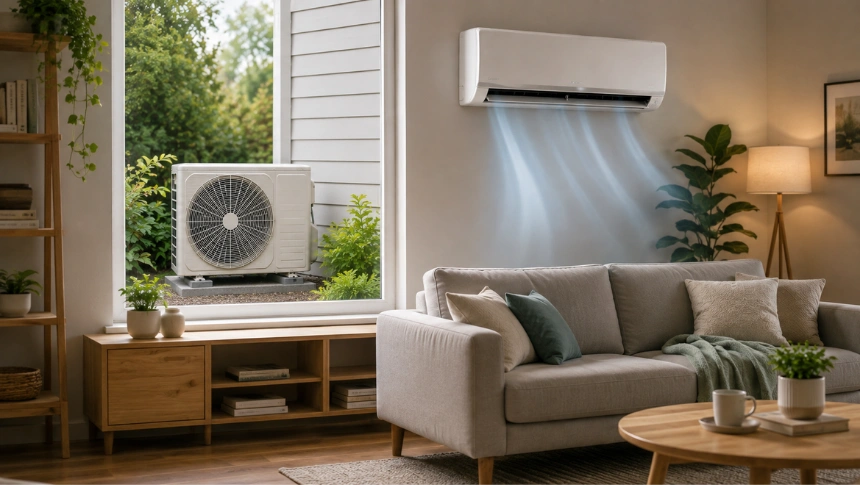
Your heat pump works hard throughout the year to keep your home comfortable, whether it’s cooling your home during summer or providing warmth in winter. Like any household appliance, it performs best when it is regularly cleaned and serviced. Ignoring routine maintenance can reduce efficiency, increase energy consumption, and lead to unexpected breakdowns.
Regular maintenance helps your heat pump run more efficiently while reducing unnecessary wear on important components. It also allows small issues to be identified early, helping you avoid costly repairs and ensuring your system continues to perform reliably for years to come.
Benefits of Regular Maintenance
- Better Performance: A clean and well-maintained heat pump delivers more consistent heating and cooling throughout your home.
- Lower Energy Bills: When your system operates efficiently, it uses less electricity, helping reduce your monthly energy costs.
- Longer Lifespan: Routine maintenance reduces strain on the system, helping extend the life of your heat pump.
- Cleaner Indoor Air: Cleaning filters and components helps reduce dust, dirt, and allergens circulating throughout your home.
- Reduced Repair Costs: Identifying small problems early can prevent more serious faults and expensive repairs later.
If you’d like to understand why regular servicing makes such a difference, read our guide on How Does a Heat Pump Work? to learn how the system operates and why proper maintenance is essential.
Regular maintenance helps lower energy costs, extends the life of your system, and keeps your home comfortable throughout the year.
Heat Pump Maintenance Checklist
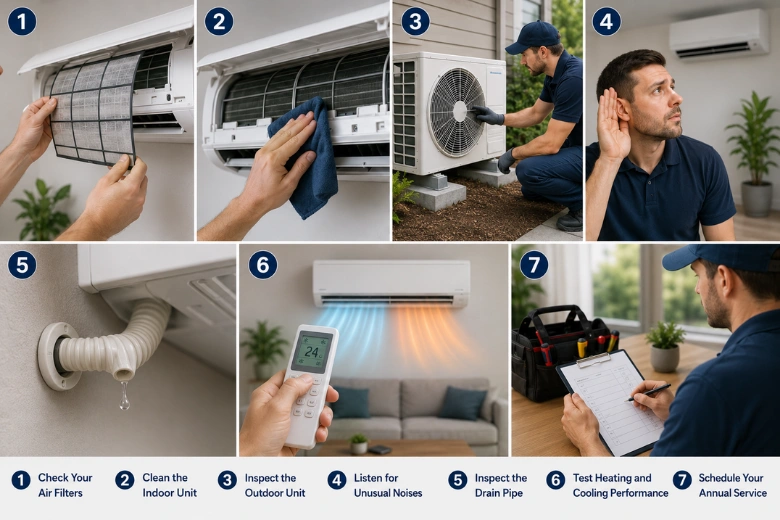
Regular maintenance doesn’t have to be complicated. By following this simple checklist throughout the year, you can keep your heat pump running efficiently, reduce energy bills, and minimise the risk of unexpected breakdowns.
Use the checklist below to inspect your heat pump and tick off each task as you complete it.
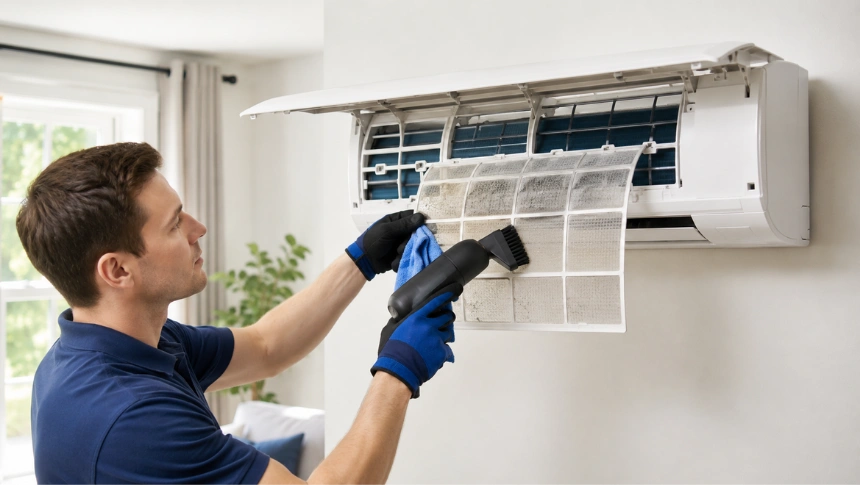
1. Check Your Air Filters
Air filters are one of the most important parts of your heat pump because they help maintain proper airflow and prevent dust from entering the system. Over time, filters collect dirt, pet hair, pollen, and other airborne particles, making it harder for your heat pump to operate efficiently.
As part of your maintenance checklist, inspect the filters at least once a month. If they appear dirty, clean or replace them according to the manufacturer’s instructions. Keeping the filters clean helps improve airflow, reduces strain on the system, and supports better heating and cooling performance.
Why it matters:
- Improves airflow throughout your home
- Helps lower electricity consumption
- Supports better heating and cooling performance
- Improves indoor air quality
- Reduces unnecessary wear on the system
If you’re unsure how to clean the filters correctly, read our how to clean a heat pump guide for simple step-by-step instructions.
2. Clean the Indoor Unit
The indoor unit can collect dust and dirt over time, especially around the air vents and outer casing. If left uncleaned, this build-up can restrict airflow, reduce heating and cooling performance, and affect the overall efficiency of your heat pump.
Use a soft, dry cloth to wipe the exterior of the indoor unit and gently clean around the air vents. Avoid using harsh chemicals or spraying water directly onto the unit, as this may damage sensitive components.
Why it matters:
- Maintains smooth airflow
- Improves heating and cooling performance
- Helps keep indoor air cleaner
- Reduces dust build-up inside the unit
- Supports efficient system operation
3. Inspect the Outdoor Unit
The outdoor unit needs a constant flow of air to operate efficiently. Leaves, grass, dust, branches, and other debris can block airflow, forcing the heat pump to work harder and reducing its overall performance.
Regularly inspect the area around the outdoor unit and remove any debris that may have collected. It is also important to leave enough clear space around the unit so air can circulate freely and the system can operate as intended.
Why it matters:
- Maintains proper airflow
- Improves heating and cooling efficiency
- Helps reduce electricity usage
- Prevents unnecessary strain on the system
- Supports reliable year-round performance
4. Listen for Unusual Noises
A heat pump should operate smoothly with only a low level of normal operating sound. If you notice rattling, buzzing, grinding, or other unusual noises, it may be a sign of loose components, debris, or a mechanical issue that requires attention.
Turn on your heat pump occasionally and listen carefully while it is running. If the unusual noise continues or becomes louder over time, arrange for a professional inspection before the problem becomes more serious.
Why it matters:
- Helps detect problems early
- Prevents costly repairs
- Protects important system components
- Maintains efficient performance
- Extends the lifespan of your heat pump
5. Inspect the Drain Pipe
Your heat pump removes moisture from the air during operation, and this water is carried away through the condensate drain pipe. If the drain pipe becomes blocked by dirt, dust, or debris, it can cause water to back up, leading to leaks and reduced system performance.
Check the drain pipe regularly to ensure water is flowing freely. If you notice standing water, leaks, or signs of blockage, it is best to have the issue resolved before it causes further damage.
Why it matters:
- Prevents water leaks
- Maintains proper drainage
- Helps avoid moisture damage
- Supports efficient heat pump operation
- Reduces the risk of costly repairs
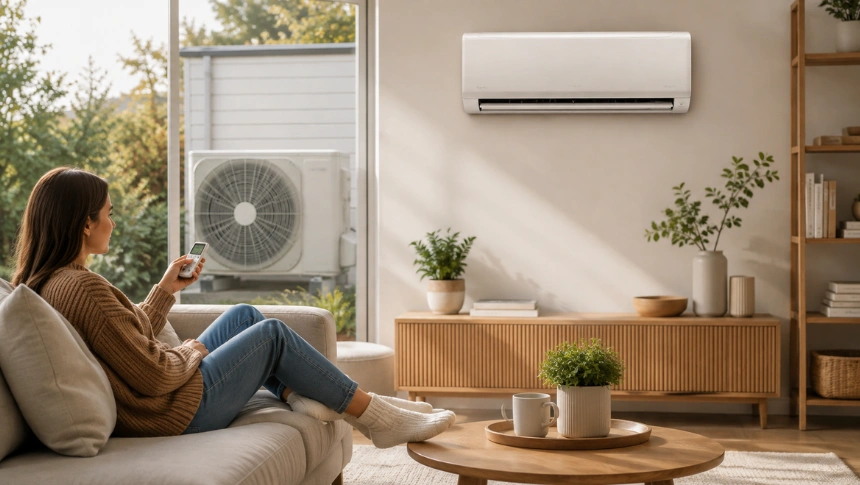
6.Test Heating and Cooling Performance
One of the easiest ways to check if your heat pump is working properly is to test both its heating and cooling functions. If the system takes longer than usual to reach the desired temperature, blows weak airflow, or struggles to maintain a comfortable indoor environment, it may require maintenance or professional servicing.
Run your heat pump in both heating and cooling modes for a few minutes and check whether it responds correctly to temperature changes. Also, make sure the airflow is strong and the system operates smoothly without unusual interruptions.
Why it matters:
- Confirms the system is working efficiently
- Helps identify performance issues early
- Maintains consistent indoor comfort
- Prevents small problems from becoming major repairs
- Ensures reliable heating and cooling throughout the year
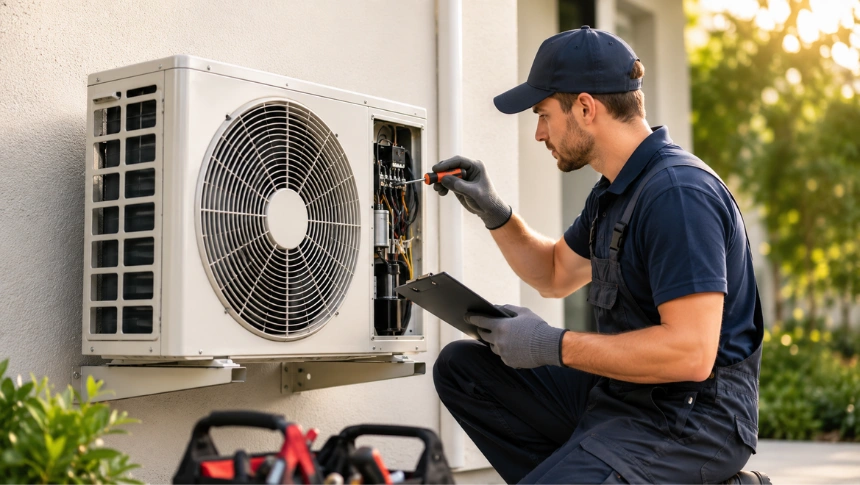
7. Schedule Your Annual Service
While regular cleaning can be done at home, a professional service is essential to keep your heat pump operating at its best. An experienced technician can inspect internal components, check refrigerant levels, test electrical connections, and identify potential issues before they turn into costly repairs.
Aim to book a professional heat pump service at least once a year, ideally before the start of winter or summer when your system is used the most. Regular servicing helps maintain efficiency, improves reliability, and can extend the lifespan of your heat pump.
Why it matters:
- Detects problems before they become serious
- Improves heating and cooling efficiency
- Helps extend the lifespan of the system
- Reduces the risk of unexpected breakdowns
- Keeps your heat pump performing at its best
Following this heat pump maintenance checklist throughout the year can help improve efficiency, reduce energy costs, and extend the life of your system. A few simple checks today can prevent expensive repairs and help keep your home comfortable in every season.
When Should You Contact Professionals?
While regular maintenance can help keep your heat pump in good condition, some problems require professional attention. Knowing when to call an expert can prevent minor issues from becoming costly repairs and help keep your system running efficiently.
If you notice any of the following signs, it’s a good idea to arrange a professional inspection.
Weak Heating or Cooling: If your heat pump struggles to reach the desired temperature or produces weak airflow, it may need professional servicing to restore its performance.
Water Leaks: Water leaking from the indoor or outdoor unit can indicate blocked drainage or other issues that should be inspected by a technician.
Unusual Noises: Persistent rattling, buzzing, or grinding sounds may be a sign of loose or damaged components that require professional repair.
Bad Smells: Musty or unpleasant odours could indicate dirty filters, mould build-up, or internal issues that need a thorough inspection.
Annual Maintenance: Even if your heat pump appears to be working normally, scheduling a yearly service helps identify hidden issues and keeps the system operating efficiently.
If your heat pump isn’t performing as expected, booking a professional heat pump service in Auckland can help identify issues early, improve efficiency, and extend the life of your system.
Conclusion
Regular maintenance is one of the simplest ways to keep your heat pump operating efficiently throughout the year. Simple tasks such as cleaning the filters, inspecting the outdoor unit, checking the drain pipe, and scheduling an annual service can improve performance, reduce electricity usage, and help extend the life of your system. Taking care of small maintenance tasks today can also reduce the risk of unexpected breakdowns and expensive repairs in the future.
Don’t wait until your heat pump starts showing signs of trouble before taking action. Following a regular maintenance checklist can help keep your home comfortable in every season while protecting your investment. If your system needs professional attention or it’s time for its annual service, contact Clean Energy Solutions for expert heat pump servicing and professional advice to keep your heat pump performing at its best all year round.