
Running a business comes with enough costs already, so rising power bills and uncomfortable indoor temperatures can quickly become a serious problem. Whether it is an office, retail store, restaurant, warehouse, or commercial building, poor heating and cooling can affect staff comfort, customer experience, and daily productivity.
This is where the right system can make a real difference. Commercial heat pump systems are designed to provide efficient heating and cooling for business spaces while reducing energy waste and improving comfort. In this guide, you will learn how commercial heat pumps work, their key benefits, where they are commonly used, what to consider before installation, and when it is best to contact professionals for the right solution.
What Are Commercial Heat Pump Systems?
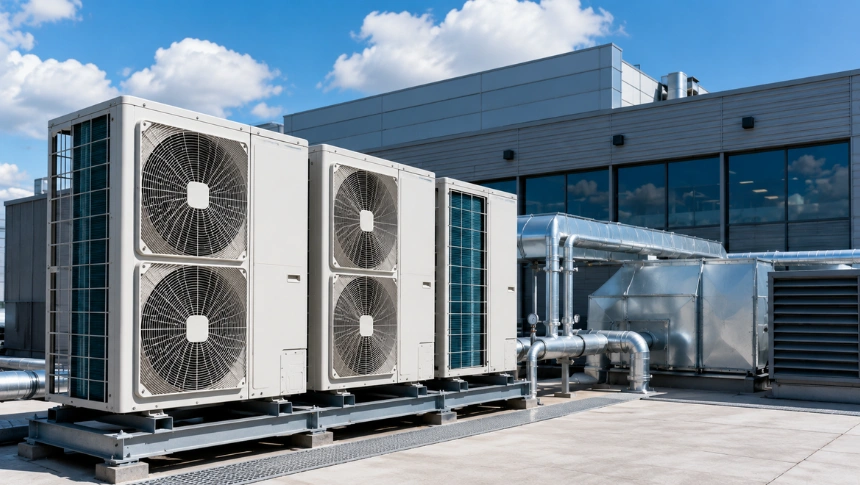
Commercial heat pump systems are heating and cooling solutions designed for business spaces that need reliable temperature control throughout the year. Unlike basic home units, commercial systems are built to handle larger areas, longer operating hours, and higher comfort demands in places like offices, retail stores, restaurants, warehouses, schools, and healthcare centres.
These systems work by transferring heat instead of producing it directly. During winter, they move heat from outside air into the building, and during summer, they remove heat from inside to keep the space cool. This makes them more energy efficient than many traditional heating and cooling systems, especially for businesses that use climate control every day.
For business owners, the main value of a commercial heat pump system is better comfort with lower energy waste. A properly selected system can help reduce running costs, improve indoor air quality, support staff productivity, and create a better experience for customers and visitors. When installed correctly, it can also provide consistent heating and cooling across different areas of the building without overworking the system.
How Commercial Heat Pump Systems Work
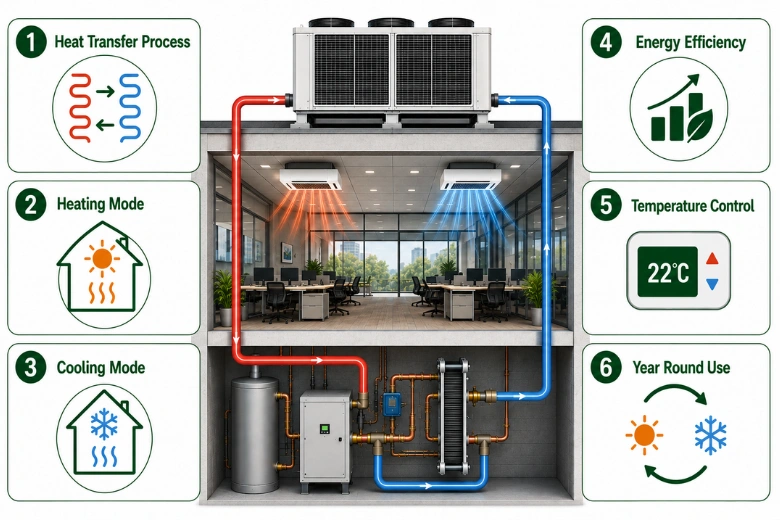
Commercial heat pump systems work by moving heat from one place to another instead of creating heat directly. This simple difference is what makes them more energy efficient than many traditional heating systems used in commercial buildings.
For businesses, this means better indoor comfort, lower energy waste, and reliable temperature control throughout the year.
1. Heat Transfer Process
Commercial heat pumps transfer heat between the indoor and outdoor environment. Instead of burning fuel or using high amounts of electricity to create heat, they move existing heat where it is needed.
This process helps the system use less energy while still maintaining a comfortable indoor temperature.
2. Heating Mode
During colder months, the system absorbs heat from the outdoor air and transfers it inside the building. Even when the outside air feels cold, there is still heat energy that the system can collect and use.
This helps warm offices, shops, restaurants, and other commercial spaces efficiently during winter.
3. Cooling Mode
During warmer months, the process works in reverse. The system removes heat from inside the building and releases it outside.
This helps keep indoor spaces cool and comfortable for staff, customers, and visitors during summer.
4. Energy Efficiency
Because commercial heat pumps move heat instead of producing it from scratch, they generally use less energy than many traditional heating systems.
This can help businesses reduce electricity usage and lower long term running costs, especially in spaces where heating and cooling are used daily.
5. Temperature Control
Commercial heat pump systems help maintain stable indoor temperatures across different areas of a building. Depending on the system type, different zones can also be controlled separately.
This is useful for businesses with multiple rooms, offices, customer areas, or workspaces that have different comfort needs.
6. Year Round Use
One major advantage of commercial heat pumps is that they provide both heating and cooling from the same system. This makes them useful throughout the year instead of only during one season.
Businesses can rely on one system for winter warmth and summer cooling, which makes climate control simpler and more convenient.
Commercial heat pumps are efficient because they transfer heat instead of generating it directly. This helps reduce energy waste while providing reliable heating and cooling for commercial spaces.
For businesses, this means better comfort, improved efficiency, and a practical long term solution for managing indoor temperatures.
Types of Commercial Heat Pump Systems
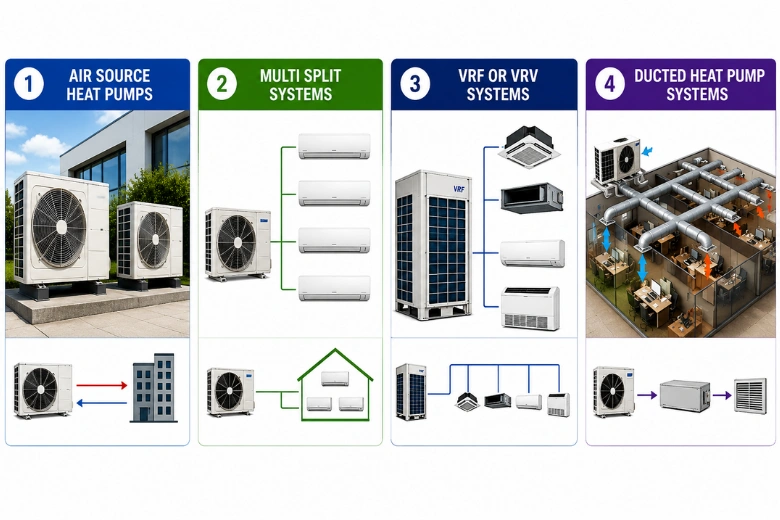
Different businesses have different heating and cooling needs. A small office may only need a simple system, while a large commercial building may require zoned temperature control across multiple areas.
Understanding the main types of commercial heat pump systems helps business owners choose a solution that matches their building size, layout, usage hours, and comfort requirements.
1. Air Source Heat Pumps
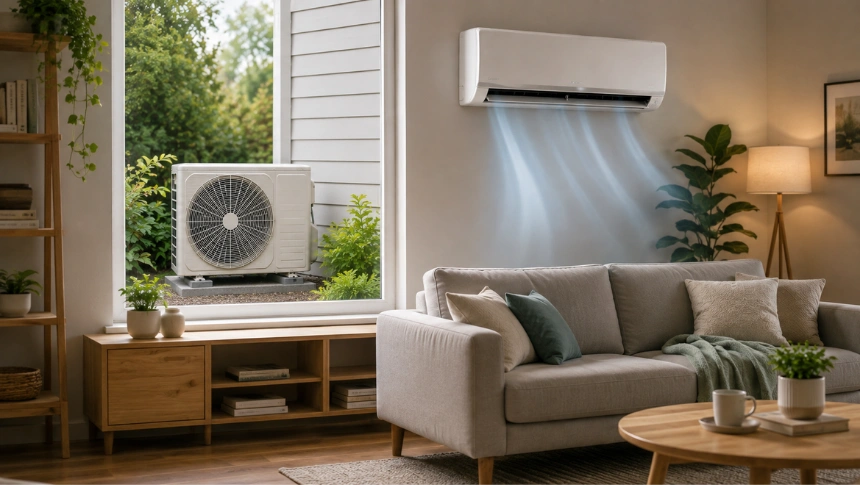
Air source heat pumps are one of the most common options for commercial spaces. They work by transferring heat between indoor and outdoor air, making them suitable for offices, shops, cafes, and small to medium business spaces.
They are popular because they are efficient, flexible, and usually easier to install compared to larger commercial systems.
Best for:
- Small offices
- Retail stores
- Cafes
- Small commercial units
Key value: Air source heat pumps are a practical choice for businesses that need reliable heating and cooling without a complex installation process.
2. Multi Split Systems
Multi split systems connect multiple indoor units to one outdoor unit. This allows different rooms or zones to be heated or cooled separately, giving businesses better control over comfort.
They are useful for businesses with multiple rooms where each area may have different temperature needs.
Best for:
- Offices with separate rooms
- Clinics
- Retail spaces
- Small hospitality businesses
Key value: Multi split systems help reduce energy waste because you can control each room separately instead of heating or cooling the entire building at once.
3. VRF or VRV Systems
VRF or VRV systems are advanced commercial heat pump solutions designed for larger buildings. They allow multiple zones to be controlled independently, which improves comfort and energy efficiency.
These systems are commonly used where different areas of a building have different heating and cooling demands throughout the day.
Best for:
- Large offices
- Hotels
- Schools
- Multi level commercial buildings
Key value: VRF or VRV systems are ideal for businesses that need flexible, efficient, and large scale temperature control.
4. Ducted Heat Pump Systems
Ducted heat pump systems distribute warm or cool air through ducts installed in the ceiling or building structure. Most of the system remains hidden, giving the space a clean and professional appearance.
They are suitable for businesses that want even heating and cooling across larger open areas or multiple connected rooms.
Best for:
- Large offices
- Showrooms
- Commercial buildings
- Open plan spaces
Key value: Ducted systems provide a neat look and consistent comfort across larger areas without multiple visible indoor units.
There are several types of commercial heat pump systems, and each one suits different business needs. The right choice depends on your building size, layout, number of rooms, and how much control you need over different areas.
Choosing the correct system from the start helps improve comfort, reduce energy waste, and support long term cost savings for your business.
Benefits of Commercial Heat Pump Systems
Commercial heat pump systems offer practical benefits for businesses that need reliable heating and cooling every day. A properly selected system can improve comfort, reduce energy waste, and support smoother business operations.
- Lower Energy Costs: Commercial heat pumps transfer heat instead of generating it directly, which helps reduce electricity usage and monthly operating costs.
- Heating and Cooling: One system can provide heating during winter and cooling during summer, making it useful throughout the year.
- Better Comfort: A well designed system maintains stable indoor temperatures, creating a more comfortable space for staff, customers, and visitors.
- Zone Control: Many commercial systems allow different areas to be controlled separately, so unused rooms do not waste energy.
- Lower Carbon Impact: Because heat pumps use energy efficiently, they can help businesses reduce overall energy consumption and environmental impact.
- Long Term Value: With proper installation and regular maintenance, commercial heat pumps can provide reliable performance and cost savings for many years.
Choosing the right system ensures better long term performance and value for your commercial space.
Where Commercial Heat Pump Systems Are Used
The right system can also help protect equipment, improve productivity, and support better temperature control across different commercial spaces.
1. Office Spaces
Offices need stable indoor temperatures to keep employees comfortable and focused during working hours. A commercial heat pump system helps maintain a pleasant environment across workstations, meeting rooms, and reception areas.
2. Retail Environments
Retail stores rely on customer comfort to create a positive shopping experience. If a store is too hot or too cold, customers may leave sooner and spend less time browsing.
3. Hospitality Businesses
Restaurants and cafes often deal with extra heat from cooking equipment, lighting, and customer movement. This can make indoor temperature harder to control.
4. Warehouses and Storage Areas
Warehouses and storage spaces can become uncomfortable due to large open areas, poor airflow, or changing outdoor temperatures. Heat pumps can help improve working conditions in these environments.
5. Education Facilities
Schools and childcare centres need comfortable indoor temperatures to support learning, concentration, and safety. Uncomfortable rooms can affect both students and staff.
6. Healthcare Facilities
Healthcare spaces such as clinics, medical centres, and treatment rooms require consistent temperature control for comfort and hygiene. A reliable system helps maintain a more controlled indoor environment.
Commercial heat pump systems can be adapted to many industries and building types. Whether it is an office, retail store, restaurant, warehouse, school, or healthcare facility, the right system helps improve comfort, efficiency, and daily operations.
Factors to Consider Before Choosing a System
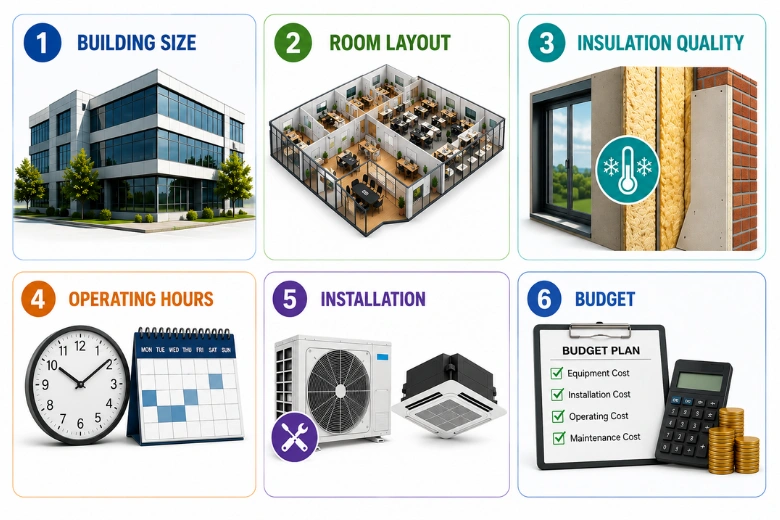
Choosing the right commercial heat pump system is not just about selecting a brand or looking for the lowest price. The system must match your building size, layout, usage pattern, and comfort needs.
- Building Size: Larger buildings need systems with enough capacity to heat and cool the space properly. If the system is too small, it may struggle to maintain comfort and run continuously.
- Room Layout: Open spaces, separate rooms, hallways, and multiple floors all affect how air moves through the building. The system design should support proper airflow across all important areas.
- Insulation Quality: Poor insulation allows heat to escape in winter and enter during summer. This makes the system work harder and increases energy use.
- Operating Hours: Businesses that operate for long hours need systems that can handle regular use without losing efficiency. Durability and energy performance become more important in these cases.
- Number of Zones: Different areas may need different temperatures depending on usage. Zone control helps improve comfort and prevents energy waste in unused spaces.
- Installation Budget: Upfront cost is important, but long term running costs should also be considered. A cheaper system may cost more over time if it is inefficient or poorly installed.
The right commercial heat pump system should match your building, daily usage, and comfort requirements. Careful planning before installation helps avoid costly mistakes and ensures better long term performance.
Installation Requirements for Commercial Heat Pump Systems
Before installation, professionals assess the building, understand how the space is used, and plan the system layout to ensure better comfort, efficiency, and long term reliability.
For businesses looking for reliable performance, professional commercial heat pump installation in Auckland can help ensure the system is correctly sized, positioned, and installed for long term efficiency.
1. Building Assessment
The installation process usually starts with a full site inspection. Professionals check the building size, layout, ceiling height, insulation, and usage pattern.
This helps determine what type of system will work best for the commercial space.
2. System Capacity
Correct system sizing is very important. If the system is too small, it may struggle to heat or cool the building. If it is too large, it may waste energy and increase running costs.
A proper capacity calculation ensures the system matches the actual needs of the business.
3. Unit Placement
Indoor and outdoor unit placement affects airflow, noise levels, maintenance access, and overall performance. Poor placement can reduce efficiency and create uneven temperatures.
Professionals choose locations that support strong airflow and easy servicing.
4. Electrical Requirements
Commercial heat pump systems may require specific electrical capacity depending on the system size and building setup. Electrical checks help ensure the system can operate safely and reliably.
This step also helps prevent future power related issues.
5. Airflow Planning
Good airflow is essential for even heating and cooling. Professionals plan how air will move through the building and whether zoning is needed for different areas.
This helps improve comfort and reduce energy waste.
6. Safe Installation
Commercial installations must be completed safely and according to relevant standards. Proper installation reduces the risk of leaks, faults, poor performance, and future breakdowns.
A compliant installation also protects the system and supports long term reliability.
Correct installation helps improve efficiency, comfort, and system lifespan. It also reduces the risk of future performance issues, higher running costs, and unnecessary repairs.
Common Mistakes to Avoid
Many businesses make simple mistakes when choosing or installing commercial heat pump systems. These mistakes can affect comfort, increase power bills, and lead to unnecessary repairs over time.
Avoiding these issues helps your business get better performance, lower running costs, and long term value from the system.
- Wrong System Size: A system that is too small may struggle to heat or cool the space, while an oversized system can waste energy and increase operating costs.
- Ignoring Zones: Different areas of a commercial building may need different temperature settings. Ignoring zoning can lead to discomfort and unnecessary energy use.
- Price Only: Choosing a system only because it is cheap may result in poor performance, shorter lifespan, and higher maintenance costs later.
- Poor Placement: Incorrect placement of indoor or outdoor units can block airflow, reduce efficiency, and create uneven temperatures.
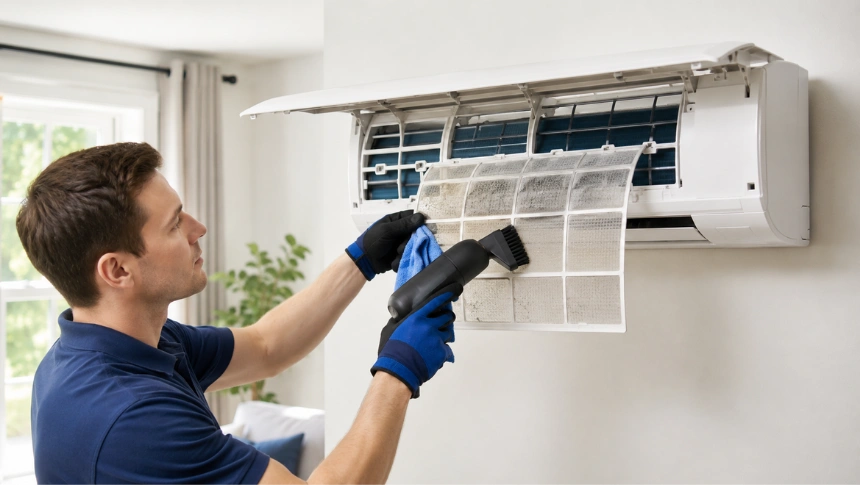
- Skipping Maintenance: Lack of regular servicing can cause dust buildup, breakdowns, and higher running costs over time.
Proper planning, professional installation, and regular maintenance can make a major difference in long term comfort and savings.
Conclusion
Commercial heat pump systems are a smart choice for businesses that want reliable heating, cooling, and better energy efficiency. They can help reduce running costs, improve indoor comfort, and support a better environment for staff, customers, and visitors.
Choosing the right system depends on your building size, layout, operating hours, and long term goals. If you are unsure which system is right for your business, contact us for expert guidance. A professional assessment can help you choose the right commercial heat pump solution and ensure your system performs efficiently for years.