
If you are planning to install a heat pump, one of the biggest questions you will face is simple but confusing: what size heat pump do I need?
Many homeowners end up guessing the size or relying on rough advice, and later deal with rooms that never feel comfortable, systems that keep turning on and off, and electricity bills that keep rising every month.
The truth is, choosing the wrong size can quietly cost you more than you expect, not just in money but also in comfort. The good news is that finding the right size is not as complicated as it sounds. In this guide, you will learn how to choose the correct heat pump size based on your home, lifestyle, and climate so you can make a confident and informed decision.
Why Heat Pump Size Matters
Choosing the right size heat pump is not just about comfort, it plays a major role in how your system performs every day. Many homeowners overlook this step and focus only on price or brand, but the size of the unit is what truly determines efficiency, energy usage, and long term reliability.
When your heat pump is correctly sized, it works smoothly in the background, maintaining the right temperature without putting unnecessary strain on the system.
1. Impact on Comfort
A properly sized heat pump keeps your indoor temperature stable and consistent. You will not feel sudden temperature changes or uneven cooling in different rooms.
On the other hand, a unit that is too small will struggle to reach the desired temperature, especially during extreme weather, leaving your home uncomfortable most of the time.
2. Energy Efficiency and Electricity Bills
Heat pump size directly affects how much energy your system consumes. An undersized unit will run continuously, trying to meet the demand, which increases your electricity usage.
An oversized unit may seem powerful, but it turns on and off frequently, wasting energy in the process. Both situations lead to higher electricity bills without delivering proper comfort.
3. System Lifespan and Maintenance
When a heat pump is not the right size, it experiences more wear and tear. Constant running or frequent cycling puts pressure on internal components.
This can lead to more frequent breakdowns, higher maintenance costs, and a shorter lifespan of your system. A correctly sized unit, on the other hand, runs efficiently and lasts longer with fewer issues.
4. Humidity and Air Quality
Heat pumps do more than just heat or cool your space, they also help control humidity levels. If the unit is too large, it cools the space quickly but does not run long enough to remove moisture from the air.
This can make your home feel damp and uncomfortable, even if the temperature seems right. Proper sizing ensures better humidity control and improved indoor air quality.
5. Overall Performance and Reliability
The right size heat pump delivers balanced performance in all conditions. It does not have to work too hard or shut down too often, which keeps the system stable and reliable.
In simple terms, correct sizing helps your heat pump do its job the way it is designed to, without unnecessary stress or inefficiency.
Taking the time to choose the right size ensures you get the best value from your investment and enjoy a comfortable home throughout the year.
What Size Heat Pump Do I Need?
If you are looking for a quick estimate, heat pump size is usually calculated based on your home’s square footage. This is the most common starting point because it gives you a rough idea without needing technical calculations.
Quick Heat Pump Size Guide
Here is a simple reference based on average NZ conditions:
| Room / Area Size | Heat Pump Capacity |
|---|---|
| Small room (10–20 m²) | 2.5 kW |
| Medium room (20–35 m²) | 3.5 to 5 kW |
| Large room (35–60 m²) | 5 to 7 kW |
| Open plan areas (60+ m²) | 7 kW or more |
This table works well for quick planning, but actual requirements can change depending on your home setup.
For the best results, it is always recommended to combine this quick guide with a professional evaluation before making your final choice.
How to Calculate Heat Pump Size
Understanding how to calculate the right heat pump size helps you avoid common and costly mistakes. Many people either guess the size or depend only on basic rules, which often leads to poor performance later.
The right approach is to use a combination of simple calculations and real home factors. Let’s break it down into easy methods so you can get a clear idea of what works best for your space.
Based on Square Footage
The simplest way to estimate heat pump size is by looking at your home’s total floor area. This method is popular because it is quick and easy to understand, especially for homeowners who want a rough idea before speaking to a professional.
In general, you can estimate around 80 to 100 watts per square metre in New Zealand conditions. For example, a home that is around 140 m² may need a heat pump with a capacity of roughly 11 to 14 kW depending on insulation and layout.
However, this method does not consider important factors like ceiling height, insulation, or sun exposure. It gives you a starting point, but relying only on this can lead to choosing the wrong size.
Using BTU Calculation
A more accurate way to calculate heat pump size is by using BTU, which stands for British Thermal Unit. This measures how much heating or cooling power your home actually needs to stay comfortable.
Required BTU=Area (sq ft)×20\text{Required BTU} = \text{Area (sq ft)} \times 20Required BTU=Area (sq ft)×20
For example, if your room is 500 sq ft, you would need around 10,000 BTU as a base estimate. From there, adjustments are made depending on real conditions inside your home.
BTU calculation is more reliable because it can be adjusted for things like insulation, number of windows, and how much sunlight your space receives. It gives a better understanding of actual performance needs rather than just size.
Considering Climate Conditions
Climate is one of the most important factors when calculating heat pump size, especially in New Zealand where weather can vary significantly between regions.
Homes in colder areas such as the South Island or places with colder winters need higher heating capacity to maintain comfort. On the other hand, homes in milder regions may not need as much heating power but still require efficient cooling.
Ignoring climate can lead to serious issues. A system that works well in one region may struggle in another. That is why it is important to always adjust your calculations based on your local weather conditions.
Combining All Methods for Accuracy
Each method on its own gives only part of the picture. Square footage provides a quick estimate, BTU calculation improves accuracy, and climate adjustment ensures real world performance.
When you combine all these methods, you get a much clearer idea of the right heat pump size for your home. This approach helps you avoid overspending, reduces energy waste, and ensures your system performs efficiently throughout the year.
If you want the most accurate results, it is always a good idea to use these methods as a guide and then confirm your choice with a professional assessment.
Key Factors That Affect Heat Pump Size
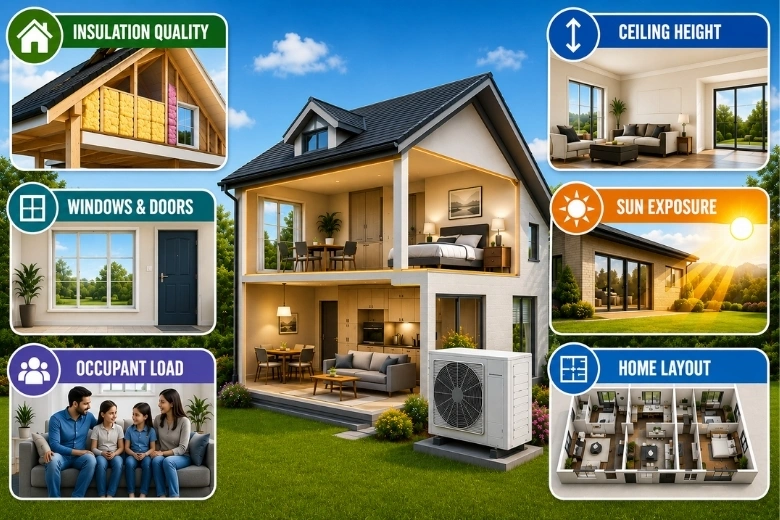
Every home is different, and relying only on area can lead to wrong sizing. These key factors help you choose the right capacity based on real conditions.
- Insulation Quality: Better insulation keeps heat inside during winter and outside during summer, reducing the load on your heat pump.
- Ceiling Height: Higher ceilings increase air volume, so more power is needed to heat or cool the space properly.
- Windows Doors: More windows and doors, especially single glazed, can cause heat loss and increase system demand.
- Sun Exposure: Rooms with direct sunlight get warmer, which increases cooling needs and affects overall sizing.
- Occupant Load: More people generate more heat inside the home, slightly increasing cooling requirements.
- Home Layout: Open spaces are easier to manage, while multiple rooms may need more capacity for even temperature.
Considering these factors helps you choose the right heat pump size for better comfort and efficiency. Ignoring them can lead to higher costs and poor performance over time.
Heat Pump Size Chart
Choosing the right size becomes much easier when you have a quick reference to start with. This chart gives you a basic idea of what heat pump capacity may suit your home based on its size.
| Home Size (sq ft) | Heat Pump Size (Tons) | BTU |
|---|---|---|
| 600 to 1000 | 1.5 ton | 18,000 |
| 1000 to 1500 | 2 ton | 24,000 |
| 1500 to 2000 | 3 ton | 36,000 |
| 2000 to 2500 | 4 ton | 48,000 |
How to Use This Chart
This chart helps you narrow down your options quickly. For example, if your home is around 1500 sq ft, you can consider a 2 to 3 ton heat pump as a starting point.
However, you should always adjust this estimate based on factors like insulation, ceiling height, and local weather conditions for better accuracy.
Doing this ensures you choose a heat pump that delivers the right balance of comfort, efficiency, and long term performance.
Common Mistakes to Avoid
Many homeowners make simple mistakes when choosing a heat pump, which can lead to long term issues. Knowing these common errors can help you make a better and more cost effective decision.
- Guesswork Sizing: Choosing a heat pump size without proper calculation often leads to poor performance and discomfort.
- Ignoring Insulation: Not considering insulation and home design can result in a system that struggles to maintain temperature.
- Oversizing Unit: Bigger is not always better, an oversized unit cycles too often and wastes energy.
- No Expert Advice: Skipping professional assessment can lead to incorrect sizing and higher long term costs.
Avoiding these mistakes helps you choose the right heat pump size and ensures better comfort, efficiency, and system performance over time.
Should You Use a Professional Calculation?
Basic calculations can give you a rough idea of what size heat pump you might need, but they do not always reflect real conditions inside your home. Every property is different, and small details can make a big difference in performance.
That is why it is always a smart choice to take help of professional heat pump experts who can properly assess your home. They consider factors like insulation, layout, airflow, and climate to recommend the right size for your specific needs.
Why Basic Estimates Are Not Enough
Methods like square footage or quick charts are useful for starting point decisions. However, they do not consider important factors like insulation quality, window type, airflow, or room layout.
Because of this, relying only on basic calculations can lead to choosing a system that is either too small or too large for your actual needs.
What Professionals Do Differently
Professionals use detailed sizing methods such as load calculations, which take into account every aspect of your home. This includes wall insulation, ceiling height, window placement, sun exposure, and even how air moves through your space.
This level of detail ensures that your heat pump is sized correctly for both heating and cooling, giving you better comfort and efficiency.
When You Should Consider Expert Help
You should consider professional calculation if your home has unique features like high ceilings, large glass areas, open plan design, or poor insulation. It is also important if you are installing a heat pump for the first time or replacing an old system.
Getting expert advice in these situations helps you avoid costly mistakes and ensures long term performance.
If you want accurate sizing and better results, it is always a smart choice to consult an expert before making your final decision.
Cost Impact of Choosing the Wrong Size
Choosing the wrong size heat pump can increase your overall costs and affect system performance. Here are the key impacts you should be aware of.
- Higher Bills: An undersized unit runs continuously, while an oversized unit cycles frequently, both leading to increased electricity costs.
- Frequent Repairs: Wrong sizing puts extra stress on components, causing more breakdowns and higher maintenance expenses.
- Short Lifespan: Constant strain and inefficient operation reduce the life of your heat pump system.
- Low Efficiency: The system fails to perform properly, resulting in poor heating or cooling despite higher energy usage.
Avoiding incorrect sizing helps you save on energy bills, reduce repair costs, and ensure long lasting performance.
Learn More Before You Decide
If you are new to heat pumps, it is always a good idea to first understand how they actually work. This basic knowledge makes it much easier to choose the right size and avoid confusion during the buying process.
When you know how a heat pump heats and cools your home, you can clearly see why correct sizing is important for comfort, energy efficiency, and long term performance.
Before making your final decision, we recommend reading our detailed guide on how heat pumps work to understand the complete working process and make a more informed choice.
Taking a few minutes to learn the basics can help you avoid costly mistakes and choose a system that truly fits your needs.
Conclusion
Choosing the right heat pump size is not just about numbers, it is about comfort, efficiency, and long term savings. If you have been wondering what size heat pump I need, the answer depends on your home, environment, and usage.
If you are still unsure or want accurate guidance, it is always better to contact for expert advice. A professional can help you choose the right system and ensure it is installed correctly for the best results.